A conversation with RUTH CAMPAU

On scale, space, and repetition — how a single stroke became a life's philosophy
“My paintings are of a human's presence in motion. That is what lives within the strokes — a memory that I have walked through each one of them.”
There’s a reason certain phrases survive long enough to become clichés. Keep your eyes on the road. Move forward. Look towards the horizon. Trite yes, and even slightly painful when offered as advice while in the thick of things, but these sentiments endure not despite their obviousness but because of their unavoidable inevitability. To move forward is arguably the one collective requirement necessary for survival, to get on with it all. No amount of repetition can wear away the plain truth of these words.
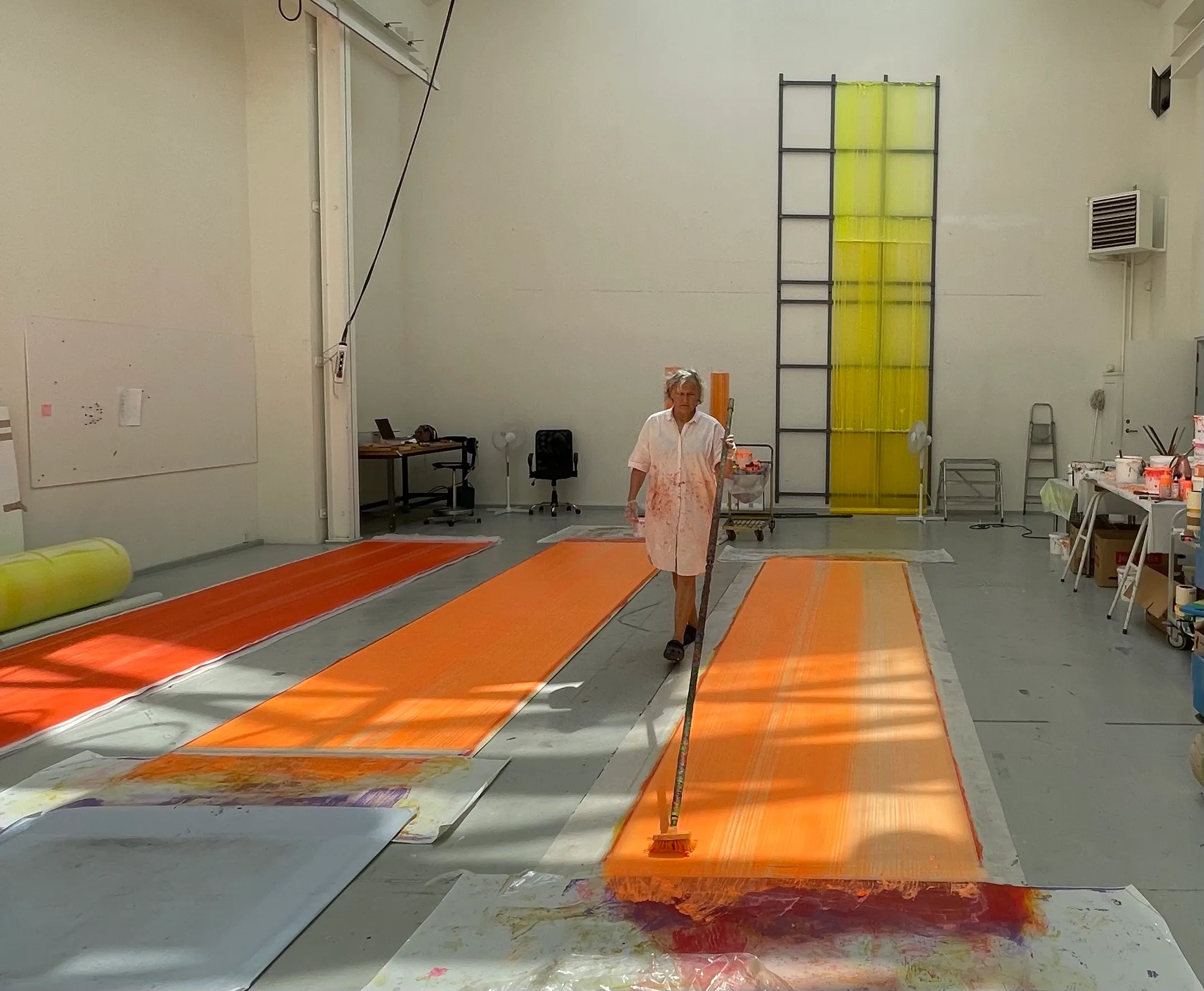
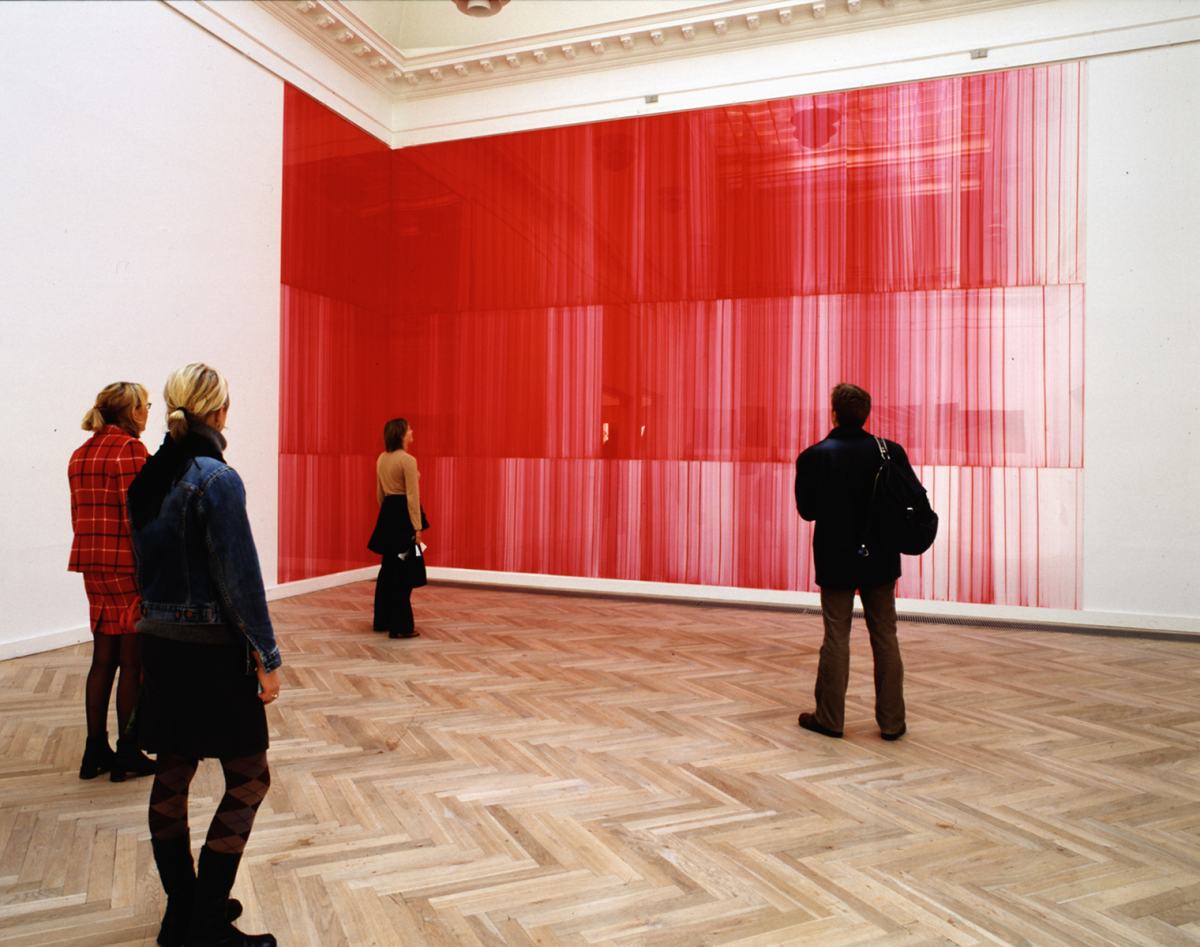
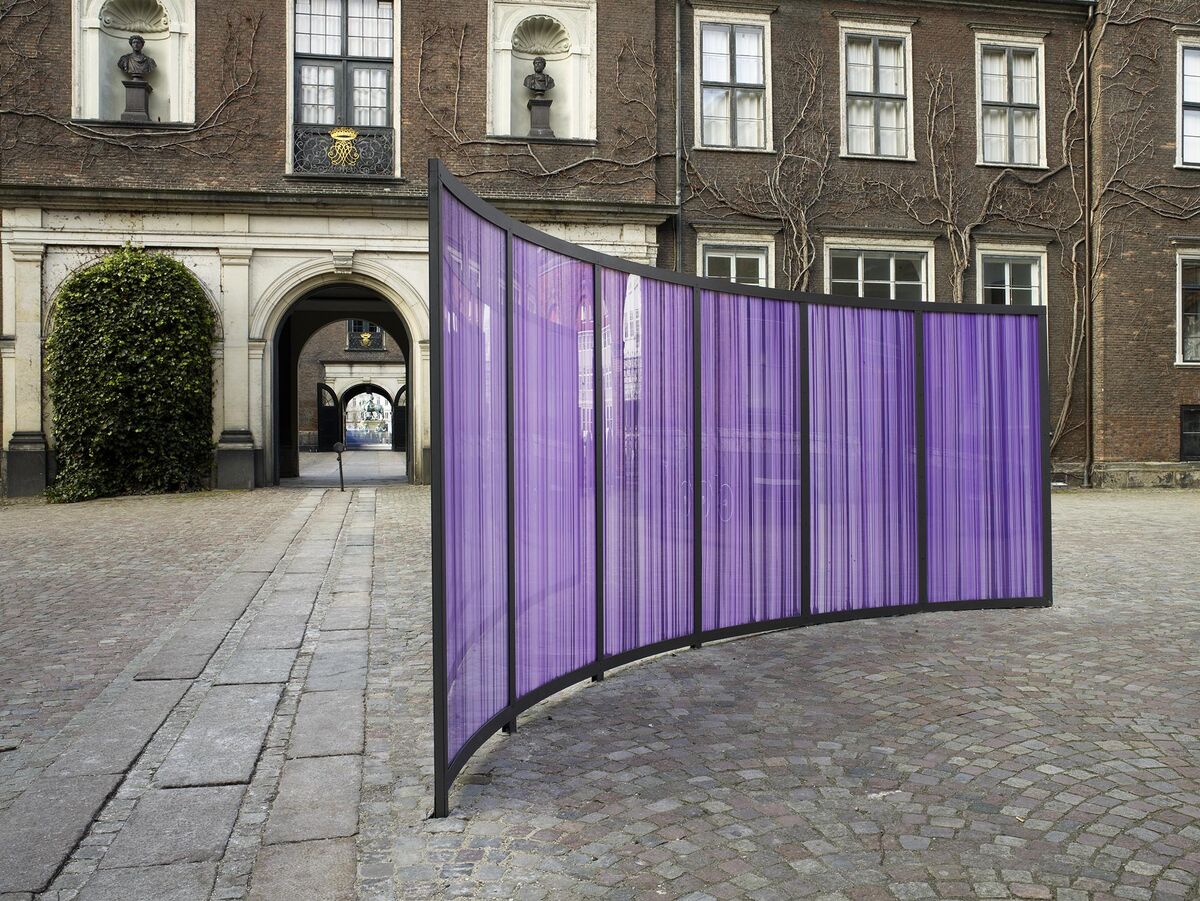
For 30 years Ruth Campau has repeated the same gesture. Walking in a straight line, pushing paint from one end of a surface to the other. Using a broom with an extended handle up to 10 feet long, the bristles are trimmed and shaped by hand until they form exactly the line she wants. Loaded with one spectacular hue of paint, Campau walks steadily forward, producing a stroke so perfectly straight most don't believe it's made by hand. When she reaches the end, she stops, and begins again. No second pass, no going back. One continuous, steady push forward. This stroke was first shown in Campau’s breakthrough piece, "Naphthol Red Light 419," exhibited at Kunsthal Charlottenborg, Copenhagen in 2001.
“The stroke must be created in a single moment of presence, the effort does not lend itself to being resumed.”
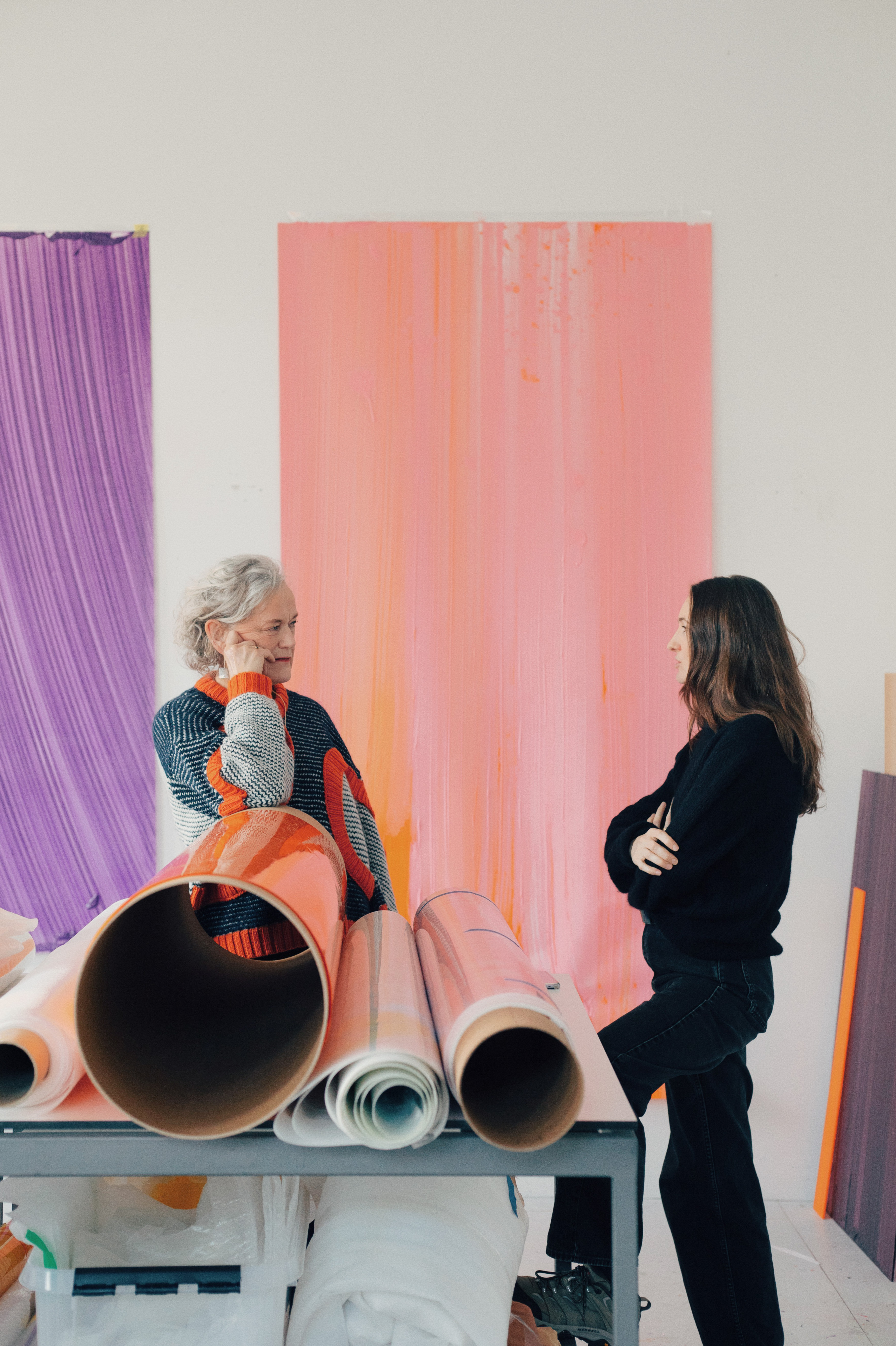
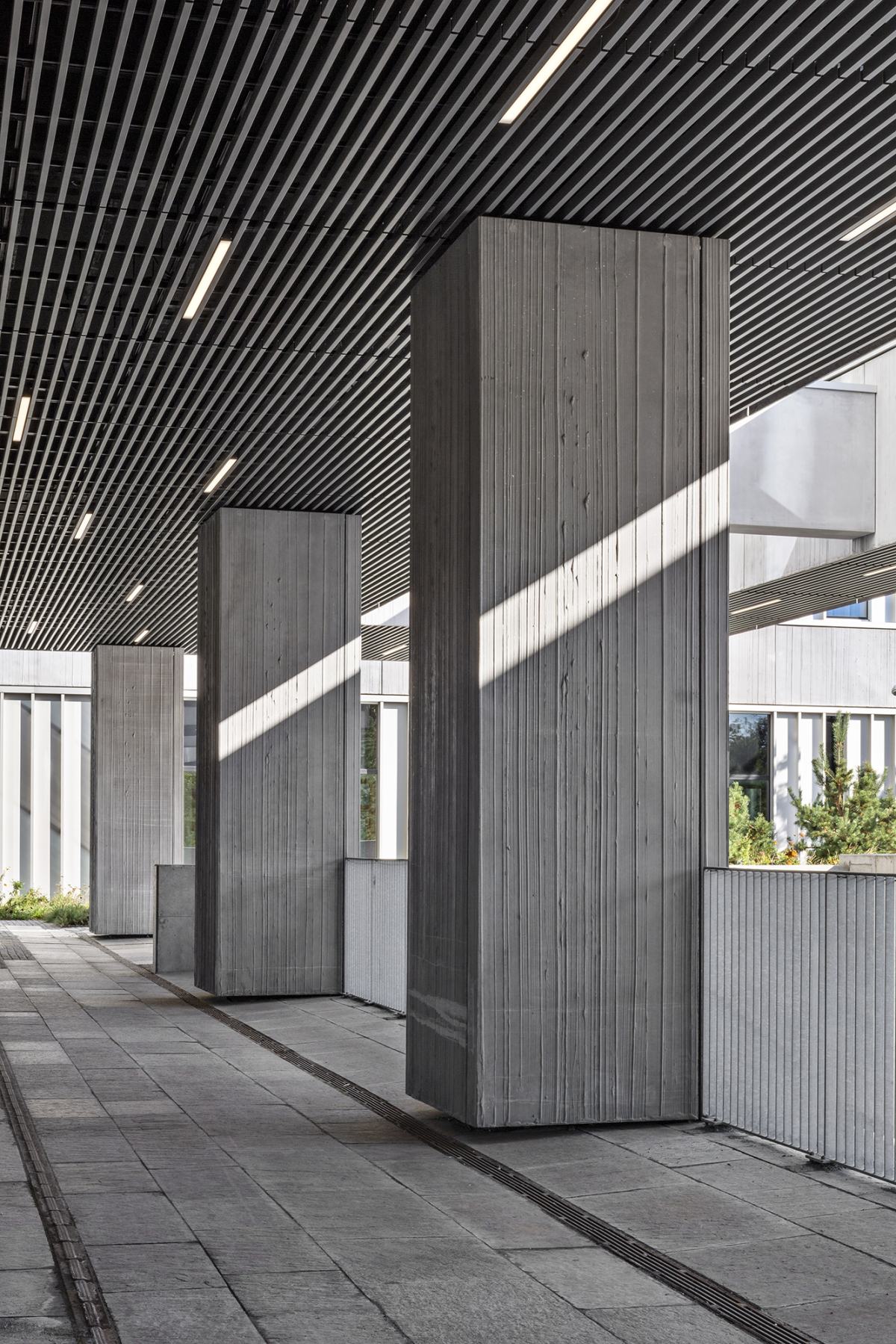
“What is it made of?” is a common question when someone first sees Ruth Campau’s work. It has the translucency of dyed silk, the flexibility of fabric, but something colder and more structural underneath. Most often it's plexiglass, sometimes Mylar — a wafer-thin polyester film — and in larger architectural commissions, the lines are cast on concrete or screen-printed on glass. The material shifts, but the mark does not.
I'd been grappling with Campau's work since we first met in 2021, not with the work itself, but with my own susceptibility to it. This isn't the register I typically respond to, and yet I was drawn in completely. Was it the invention within such a simple gesture? The scale? The way it felt to stand in its presence?
I was three years into my move to Copenhagen when I first met Ruth, and prior to that I had spent eight years in New York. Although I didn't yet understand where her influences had come from, I sensed they extended past her Danish perspective into something I couldn't quite place. The color? The scale? The exactness? The simple beauty?
Standing in front of it, I felt both stillness and momentum at once, as if the line were slowing down and speeding up in the same breath. The longer I've spent looking at her work, the more I've come to understand that the gesture, her brushstroke, is the meaning. She is not simply illustrating a philosophy, she's enacting one. And rather than leaving behind a trail of where she's been, like a snail tracing its path in silver, she lays the road down in front of her as she goes, each stroke not a record of the past, but a hopeful path towards what comes next.
…And isn't that what we're all doing? Or at least attempting to? Don't we all hope that our forward motion, simply getting out of bed in the morning and starting our day, is leading us in the right direction?
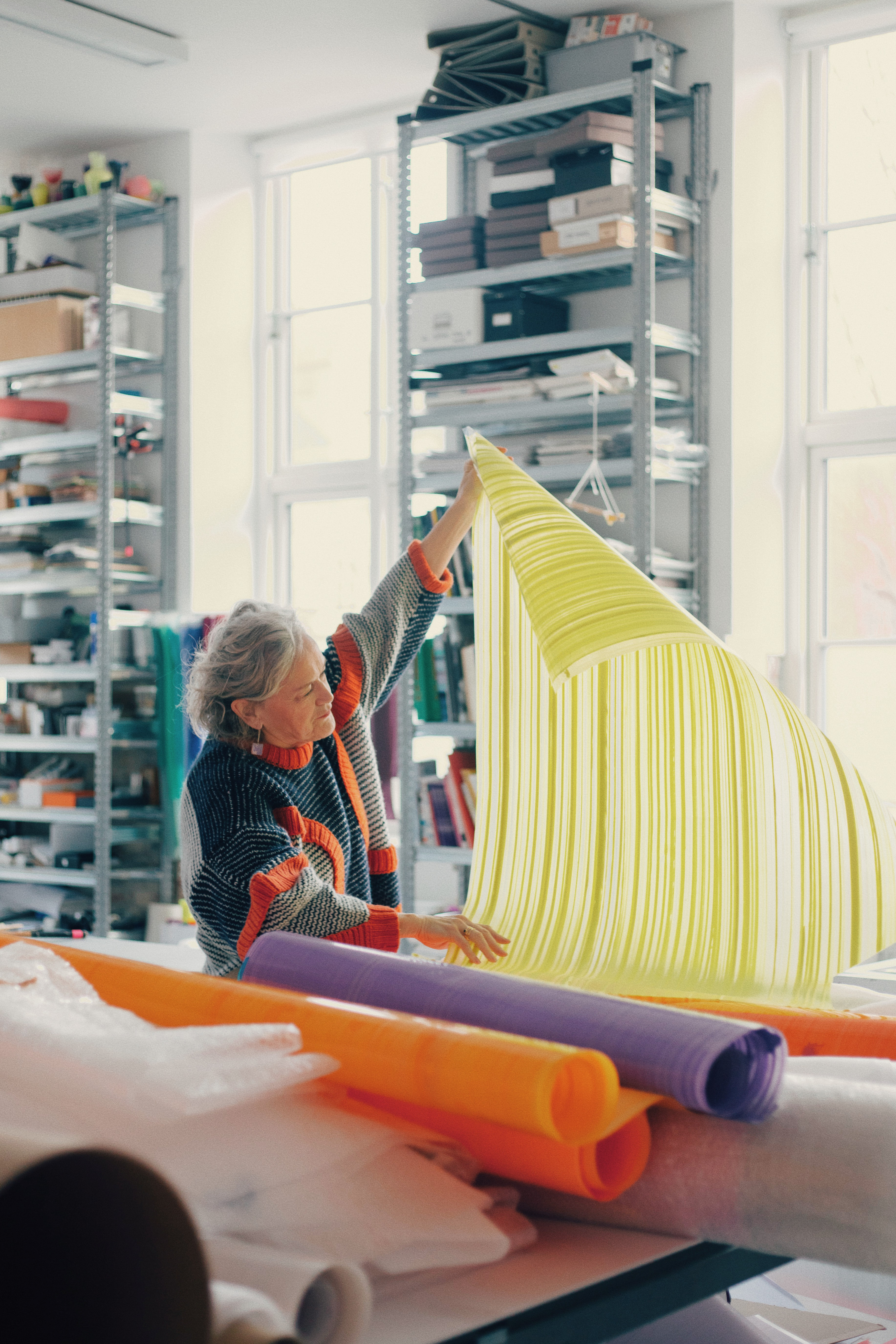
Born on the small island of Mors, in Jutland, Denmark, in 1955, Ruth Campau left for America before she'd even visited Copenhagen, the capital of her own country. At 21, she fell in love with an American man and embarked on a road trip that lasted six months, driving from California all the way to the Keys in Florida, through Louisiana, Texas, New Mexico, and Arizona, and back through Mexico up to Los Angeles, a journey that turned out to be a catalyst in finding her expression. The west coast of America is where she spent most of her time.
"This period changed everything for me," Campau says. "I'd never experienced this color or scale before, even the sky felt larger than I'd ever known it to be in Denmark." The roads felt infinitely long, the landscape vast, the people open in a way that contrasted sharply with the humble discipline of island life on Mors. "On Mors it was really about: don't say too much, get to work, do your work. In America, opportunities for other ways of living suddenly felt possible."
Mors sits in the northwest of Jutland, with a population of fewer than 20,000. Campau grew up the youngest of six children (her nearest sibling eight years her senior) on a farm at the edge of the waterfront. Her father called it "the end of the world." With her brothers and sisters grown and gone, she learned early to make her own company, in the woods, the garden, down by the water. "I was alone a lot as a child, you could say, but never lonely, and nature became my first reference point of perception and interaction."
“When surrounded by nature, you naturally get small, and there’s no escaping how the Redwoods of Northern California put human scale into perspective.”
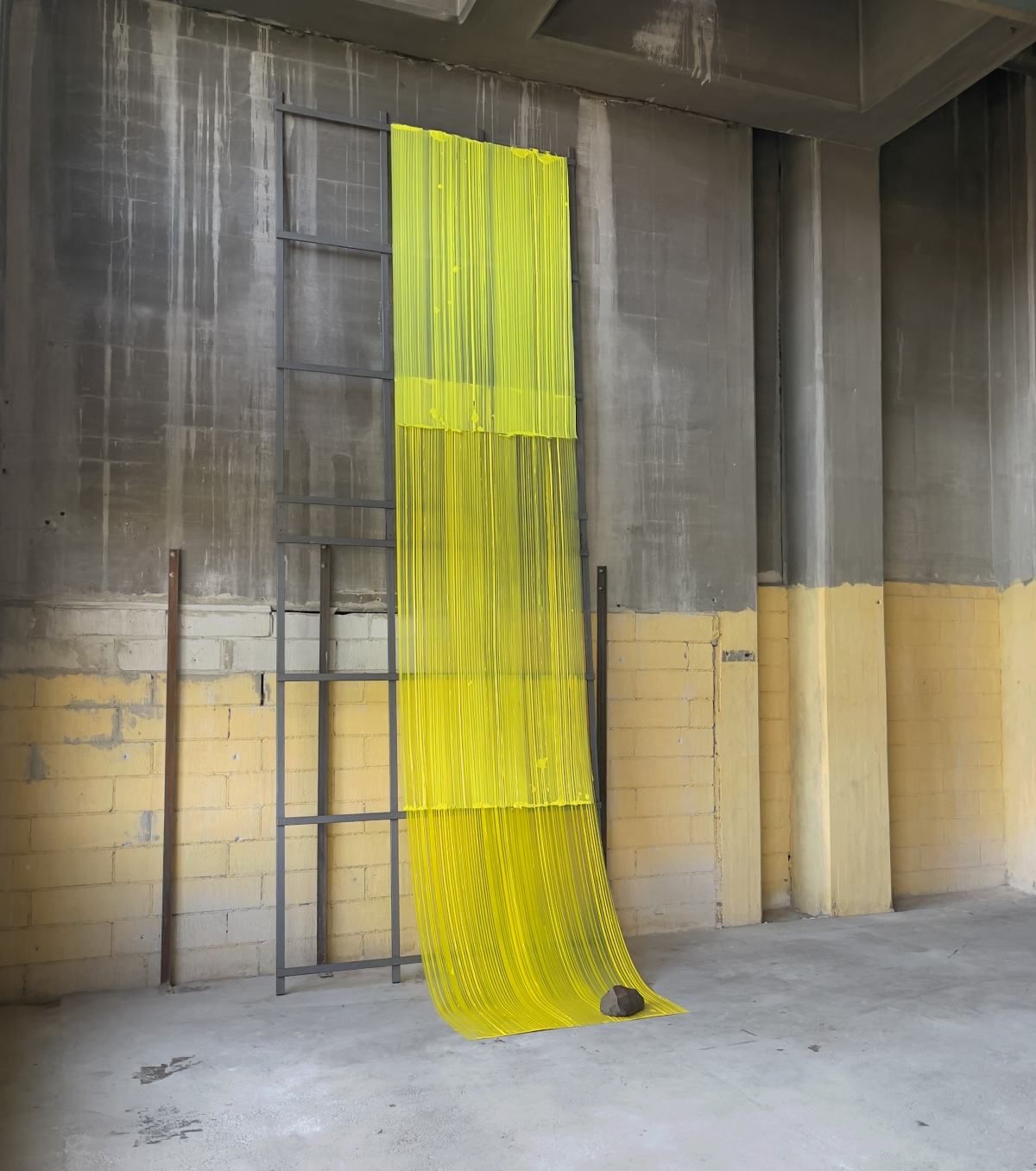
Many of Campau's installations are built to humble the viewer in much the same way.
“I like that same feeling in an installation. When you’re smaller than the art piece, you become part of it. When you're smaller than something, you become inside it. With a small painting though, you're looking into a little window, an illusion of another world. I want my works to be immersive, indoor landscapes."
When I later read more about the island of Mors beyond Campau's biography, I came across images of the moler cliffs that shape parts of the island's coastline. Rising up to 60 meters in places, they are striking even through photographs, dark bands of volcanic ash running through pale chalky rock in long, even, horizontal lines, a repetition almost like a drawing made by the land itself. The cliffs are now on Denmark's tentative list for UNESCO World Heritage status. Campau has never drawn the connection herself, but it's hard not to see it, a child who spent her solitary hours by that same water, later building installations that work on the viewer the way these cliffs do.
“I work with painting in the expanded field, where the work’s interaction with the surrounding environment is essential,” Ruth says. “For this reason, my works often take form in large installations that vanish into thin air when the exhibition is over.”
The American road trip finished in San Francisco, and it was during Campau's time in California that something crystallized. Her boyfriend at the time took her to SFMOMA, the first museum she'd ever been to. Back on Mors she had seen reproductions of Asger Jorn, but nothing like this. There were installation works you could walk into, art that carried explicit political opinions, the post-war Americans in full force: Warhol, Richard Serra, James Turrell, Donald Judd, Barnett Newman, Edward Kienholz, some of them dripping and gestural, made with ordinary household paint. Also Clifford Still was amazing and so powerfull
"This was my first meeting with art from that perspective. It really opened something new inside me… In a capitalistic sense, the attitude in America is bad, the demand for size, the scale, all of that is totally offputting, but it also leaves so much space for the wild to be expressed, to experiment, for things to be let loose.”
Though the genesis of her gesture was made at this time, it took over a decade to find the brushstroke she is most known for today.
When Campau came back to Denmark with her American boyfriend the welcome was not entirely warm. It was the mid-1970s, post Watergate, Nixon's resignation, the Vietnam War still dragging on, and for a lot of Danes, America had come to look like the source of the world's problems. "They had so much prejudice against Americans in the seventies," Ruth says. "Not my family, but my friends. It was a capitalistic country and everything 'bad' seemed to come from America. It continues to be a strange place, but I loved it, I really did. After Trump, though, a lot has changed. I don't love it in the same way anymore."
They married in 1977, and the marriage lasted ten years, living together in Aarhus the entire time. Through various trials and tribulations, some cultural, others not even understood at the time, the relationship ended. The divorce, when it came, set off a crisis that lasted nearly 10 years, one she didn't think would ever end. "I couldn't talk to my family about it, not really," Ruth recalls, though she found support in one of her sisters, and mostly in her friends.
"I was incredibly saddened by my divorce" she says, "and it affected my artistic expression… I needed to move to Copenhagen where the art scene was bigger, but it was not easy to be an outsider on the Copenhagen art scene either.” ‘Why do I keep doing this?’ I used to constantly think to myself. It was a really tough period and I felt quite alone. I tried to get a job. But picturing myself working nine to five, forty hours a week was terrible. I got depressed just at the thought of my time being taken in that way. I made a choice to paint my way through this time, and through this choice, I slowly but surely found more energy."
“Simply focusing on what I wanted to do and ignoring everything else ironically allowed me to forget myself, forget my depression in a sense, so I dug further into my art, and really started to go for it.”
"Slowly I learnt to deal with the inevitable frustrations along the way, simply because I loved painting. This process of finding your way as an artist is disturbing, and you have to deal with it, because the future isn’t known, and you never know what you're doing a month from now, when the next money will come, and that's something you really have to deal with.”
Campau describes this search for her brush stroke as a period of “searching for home” and for years she felt like she'd been traveling down tight roads, small slipstreams, down narrow canals, searching but never quite arriving. Then one day, "whoosh," she says. Even in the retelling of this moment, I hear a relief in Ruth’s voice, as if this was the very moment she’d discovered a true sense of freedom, her very own Amazon, with a current wide and strong enough to carry her forward, and one that has kept her going ever since.
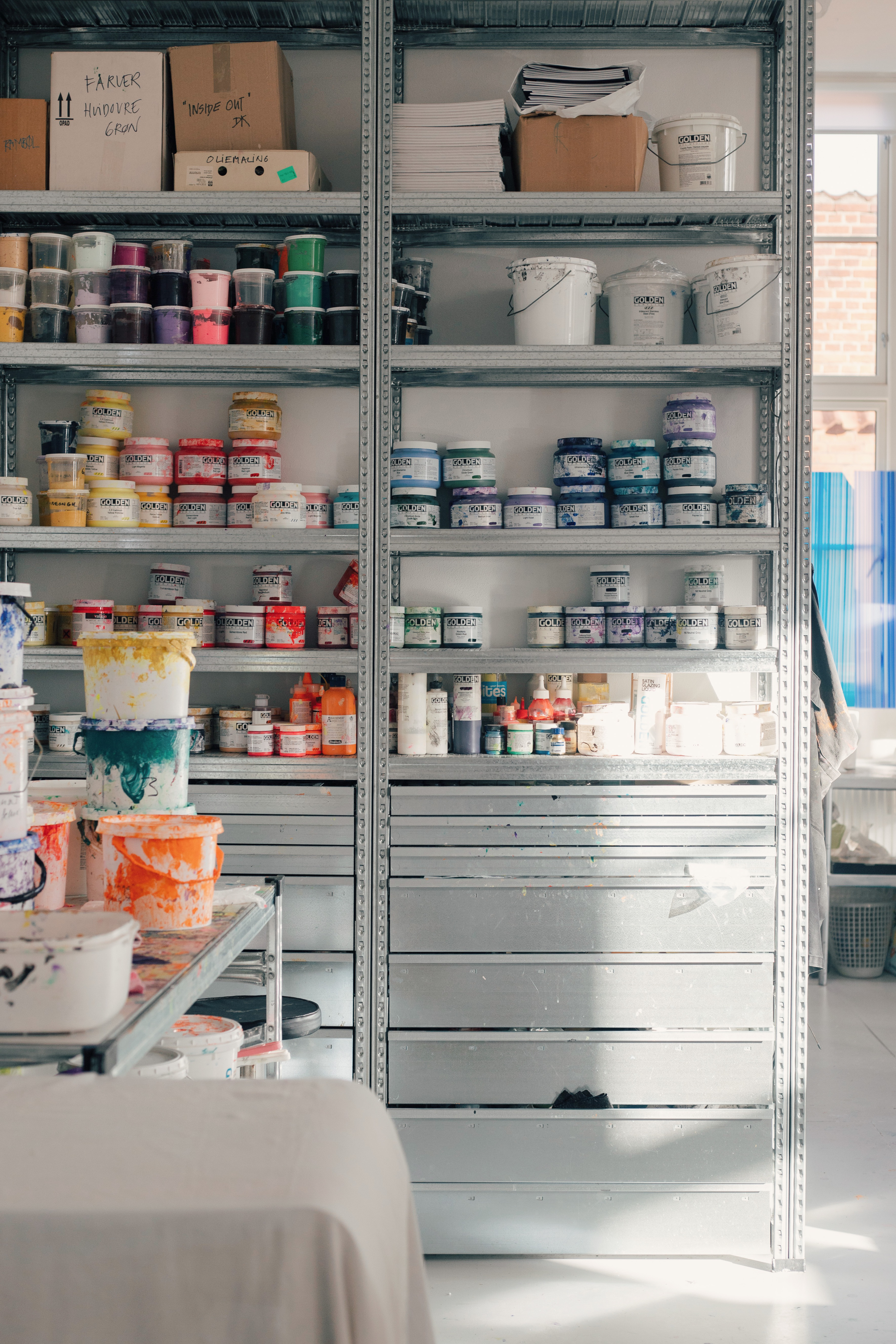
In terms of the origin of her colors, these trace back to something unexpected — the arrival of home computers in the early 2000s, when color suddenly had light behind it, a vibrancy that had never existed before. The computer screen reminded her of that same feeling she'd had at SFMOMA three decades earlier, something distinctly American; a new, although, commercial horizon. "Computer color" was an entirely new way of seeing, and acrylic paint, she found, came closest to matching it, especially against a white wall, which expanded the brightness even further.
"When I found this gesture paired with the bright colors, I felt a sense of renewal, and never got tired. I jumped into it and kept going, and I'm still going with it.
“When you find that feeling, it doesn't take away energy; it gives energy without hurting yourself or eating yourself up.”
The whole process of developing my specific expression took a long time, because that crisis went on for five to ten years. I supported myself with some teaching on the side, but I needed that time to develop my own expression."
To achieve the stroke, as if instructed by a roadside speedometer, every painting is created with the same walking speed. One painting is not slower or faster than the others, they have maintained a pace, not unlike “cruise control” but Campau steadily remainly behind the “wheel” or should we say broom.
“To do this stroke, you need a very flat substrate that cannot bend or at any point be uneven as it will ruin the stroke. It’s also a matter of time, as acrylic dries fast, around 5-7 minutes, so once you start moving, you have to keep going… but I never get tired of it — it’s like walking onto a stage to perform this very stroke. It’s a ritual and a meditative way of working as it requires full concentration, necessitating the exclusion of everything else, and I believe that this sense of presence is also conveyed to the viewer.”
This searching period of Ruth’s, paired with constant movement, brings to mind the famous line from Blaise Pascal’s Pensèes, “Our nature lies in movement; complete calm is death.”
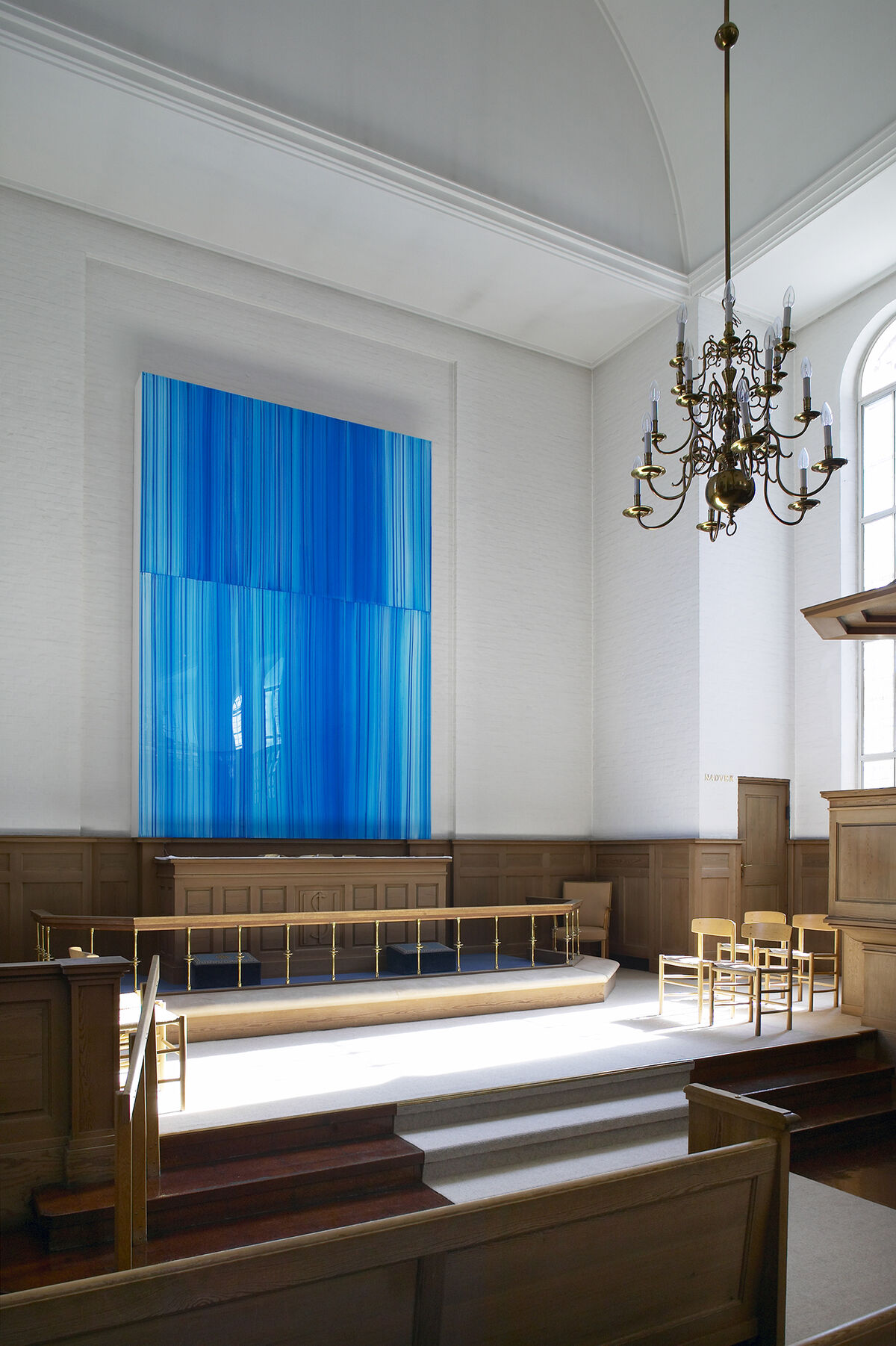
“I want to give people a sensation when they walk into a space. In a red room for example, you experience it four degrees warmer than a blue room. So color does have an effect.”
This was exactly what she achieved with the 15ft tall "Naphthol Red Light 419" art piece in 2001, which was a huge installation at Charlottenborg exhibition hall.
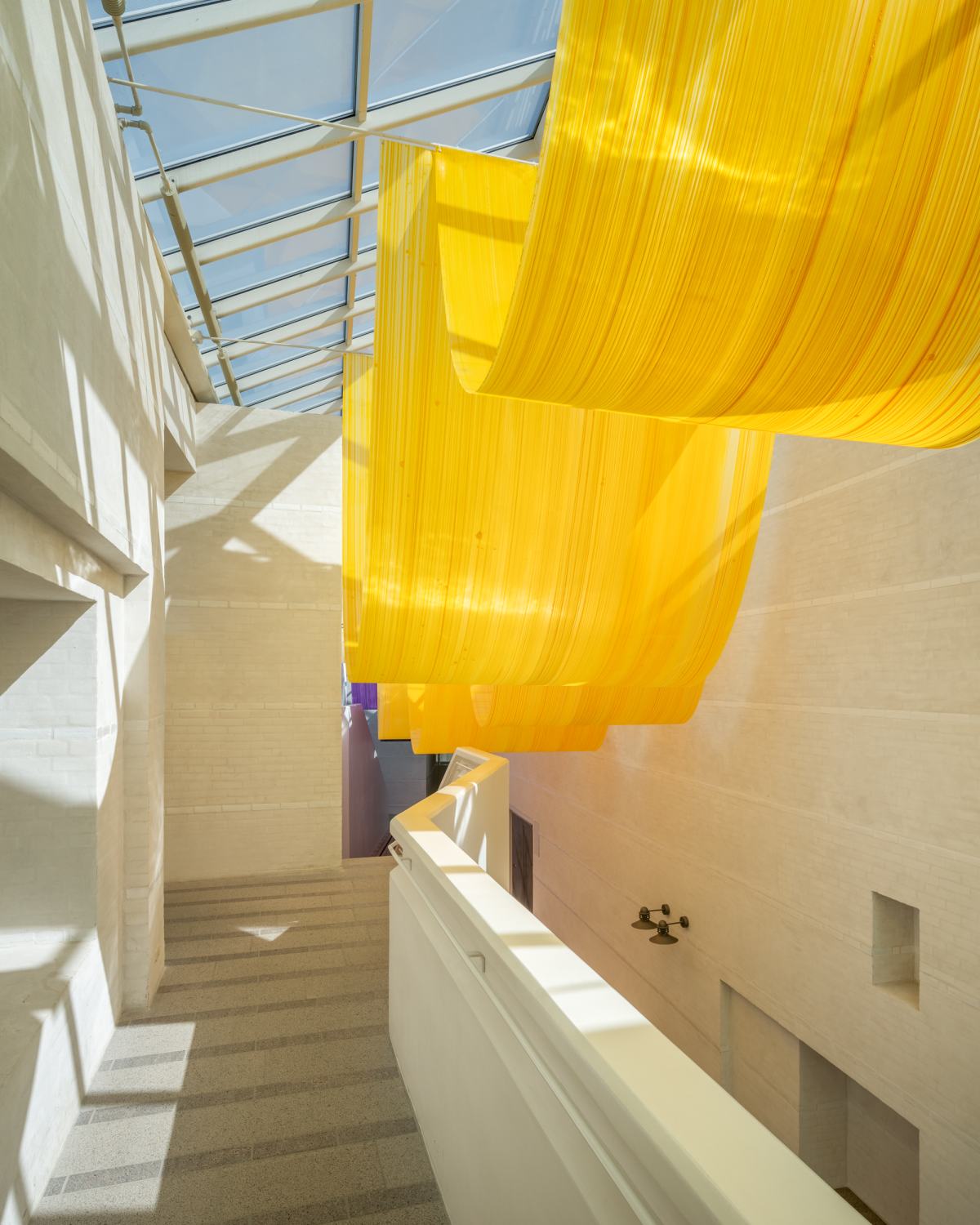
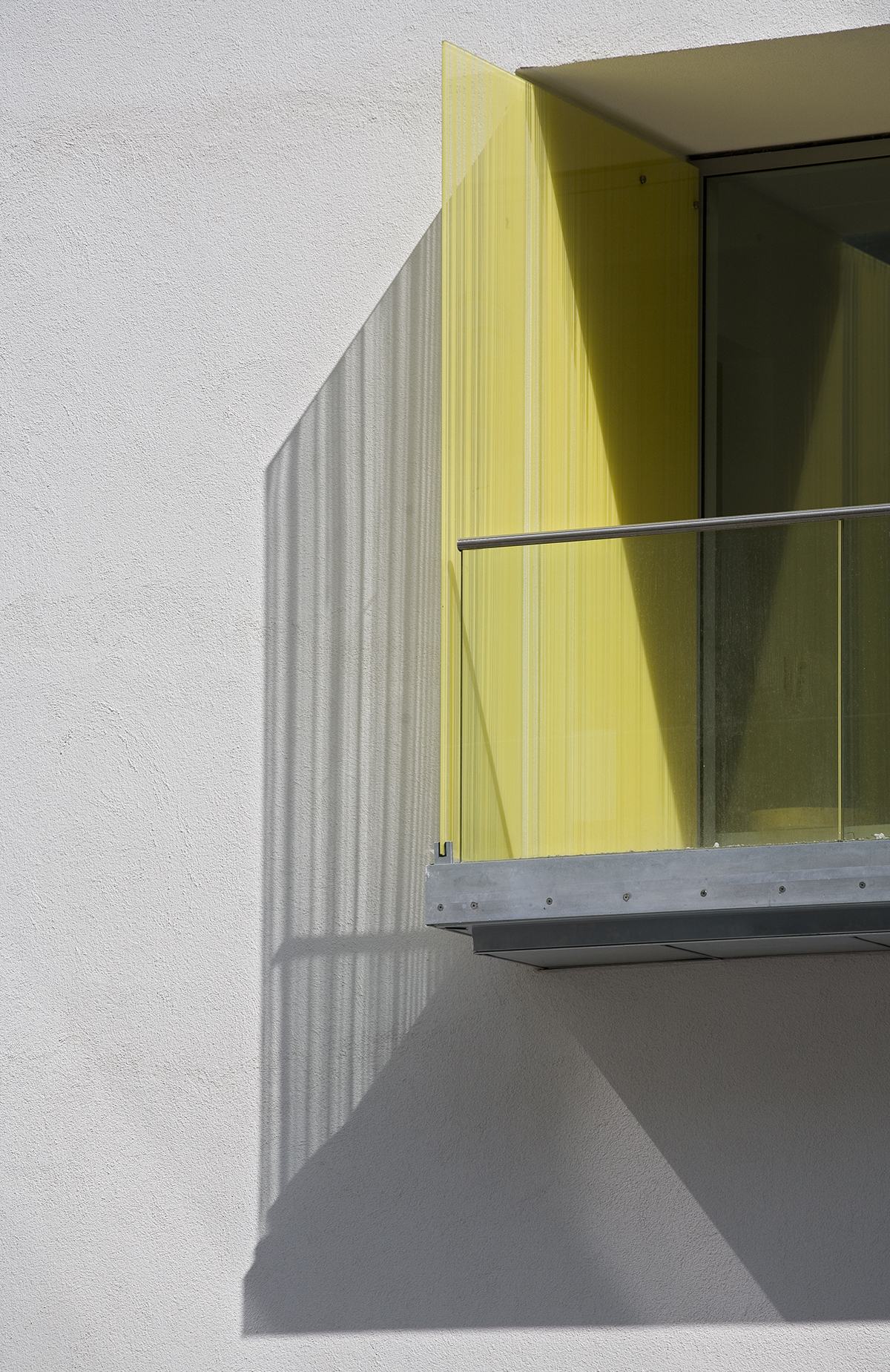
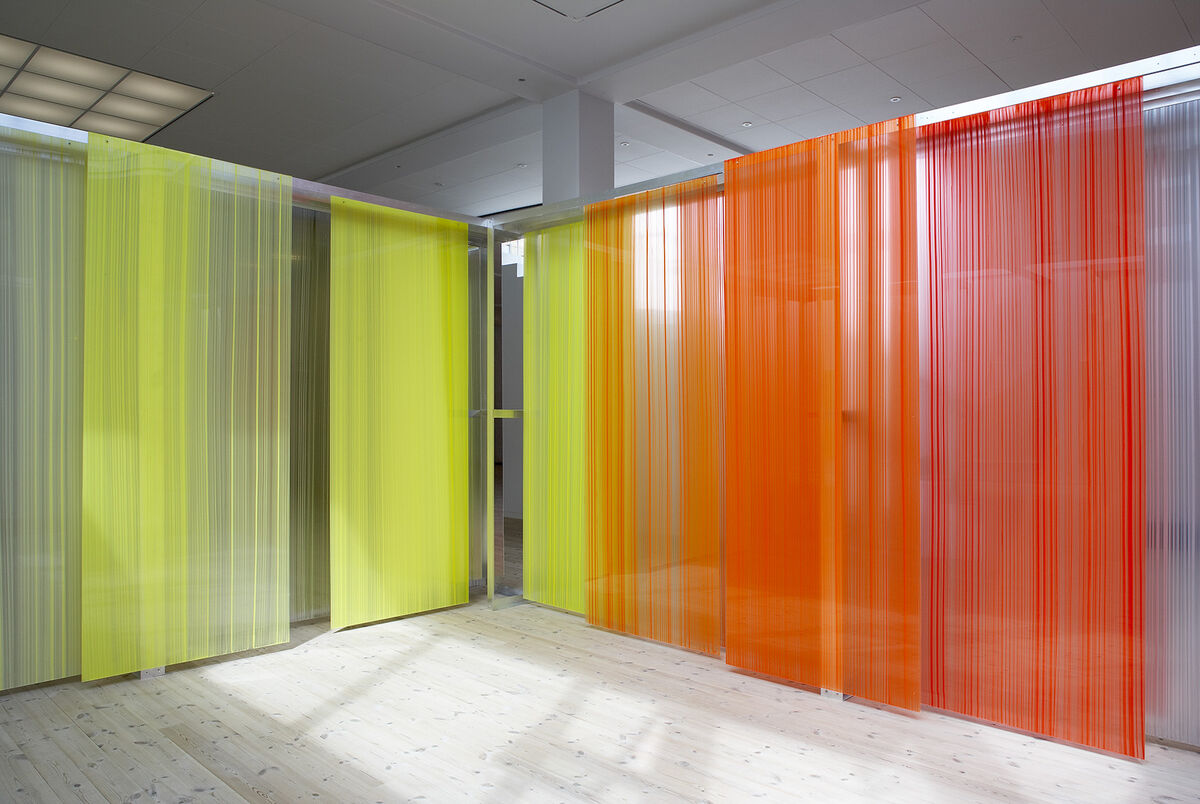
From this, Campau started getting attention from architects, and from that came her first commission, proof that this work could translate into architecture, into silkscreen on glass, into a housing block.
"Nordlyset," with C F Møller Architects, became the start of this direction in her practice. "Playing around with a large scale was the inroad, not out of an interest to move into architecture," she says. "I was more interested in seeing how my work could change the feeling in a room. Not just decorate a space, but shift how a person stands in it, how they breathe in it." The site itself seemed almost too fitting, Amerika Plads, named for the old transatlantic piers where ships once departed for America, the very horizon that had shaped her work in the first place.
The project, completed between 2002 and 2006 for a housing complex there in Copenhagen, used silkscreen-imprinted glass throughout, as balcony dividers, in the windows at the entrances, and along the elevator shafts, where the color shifts gradually lighter as you rise toward the seventh floor.
That sense of forward motion is also what her work has come to embody in the world. Increasingly, it has found its way into spaces defined by comings and goings, arriving and departing: three hospitals, an airport, two churches, and a psychiatric hospital in Borås, Sweden.
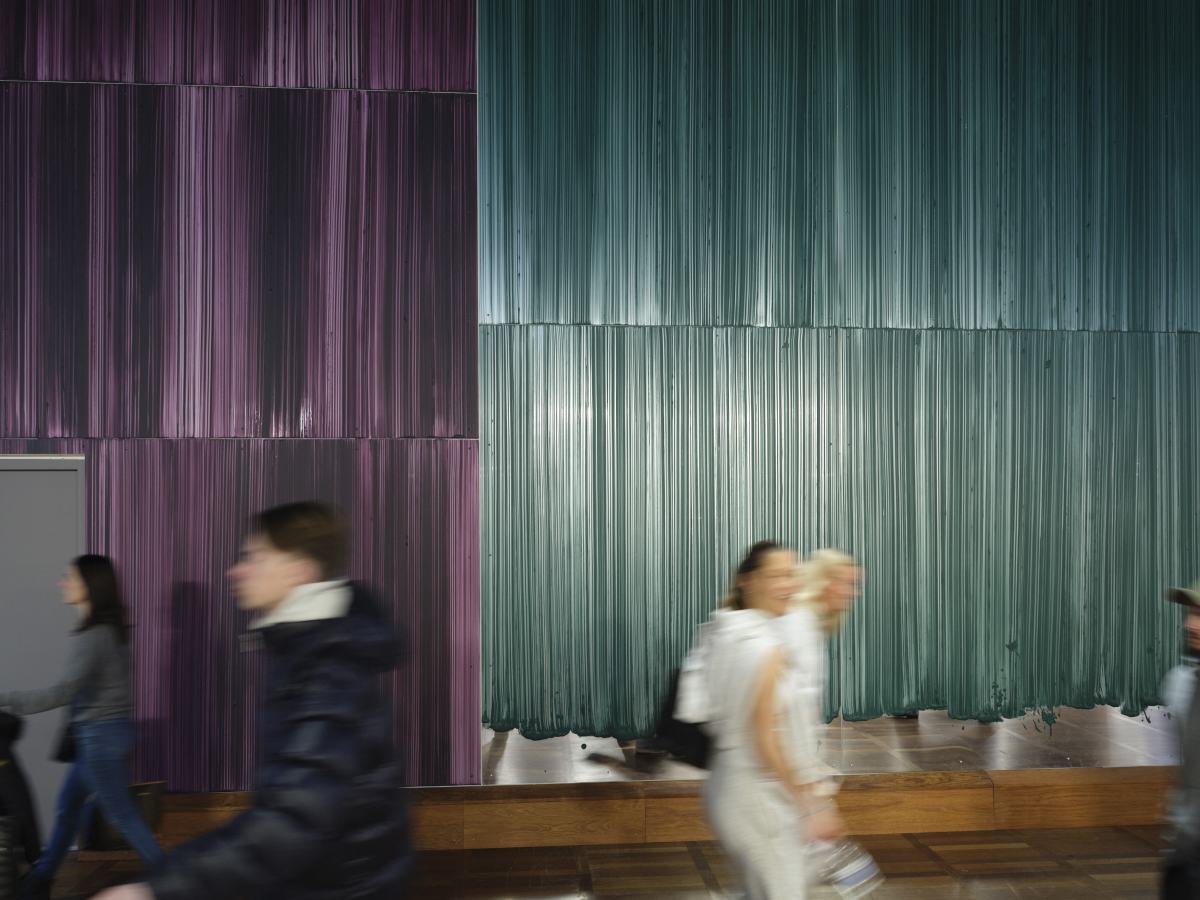
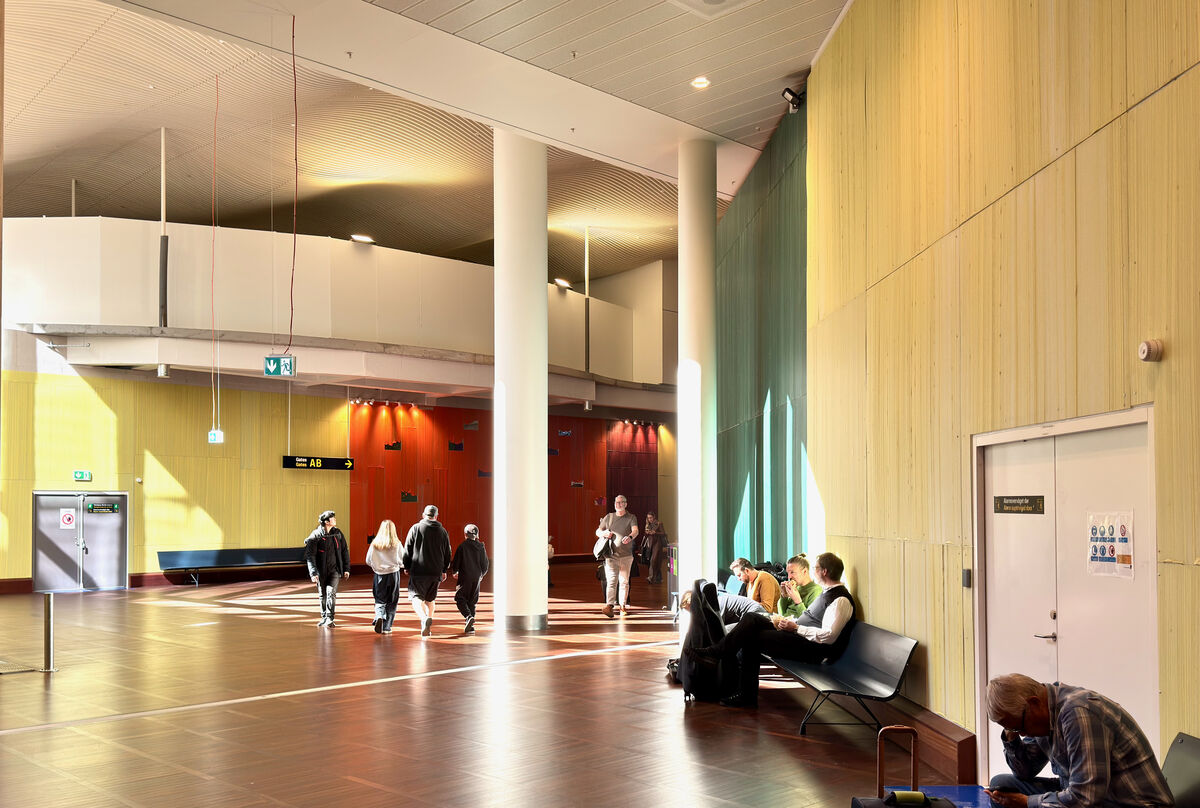
Ruth's largest commission to date is at the Copenhagen Airport, fittingly called Something in the Way We Move which she began in 2024. Stretching 280 meters long and 6 meters high between Gates B and F, it’s one of the largest paintings ever made in Denmark, and speaks directly to the experience of travel, of moving from one place to the next, one end to the other. "Travel is movement," she says. "We move from one end of the world to another. That brings also a movement in your perception of the world — and your attitude toward the world will automatically be moved, at least a little bit." Created in phases alongside the airport's own expansion through 2028, the work changes as the terminal around it changes. A painting in motion, for a building in motion.
Ruth Campau has received numerous prizes and grants throughout her career, including the Eckersberg Medal (2018) and The Danish Art Foundation’s Lifetime Honorary Grant (2020). She also received the Ole Haslunds Kunstnerlegat in 2015, and The Danish Art Foundation’s three-year working grant in 2008, as well as the Anne Marie Telmányi Legacy in 2007.
The Eckersberg Medal is one of Denmark's most prestigious art honours, awarded by the Royal Danish Academy of Fine Arts to artists who have made an outstanding contribution to Danish visual art, placing Campau in very distinguished company. The Lifetime Honorary Grant from The Danish Art Foundation is equally significant, recognising a career of sustained artistic excellence rather than a single achievement.
“You can’t make everyone satisfied with your work, if you try you’re dead, because it will rip you of your energy.”
"At your age, there are things you can still change about your life.” Ruth says to me, “But around 60, it doesn't feel as easy — a lot of people get depressed at this age. It's also the age where, if you're satisfied with your life, you get a deeper sense of who you are, a real appreciation for everyday life and what’s really important. So much falls away that doesn't matter anymore, and that brings its own kind of satisfaction."
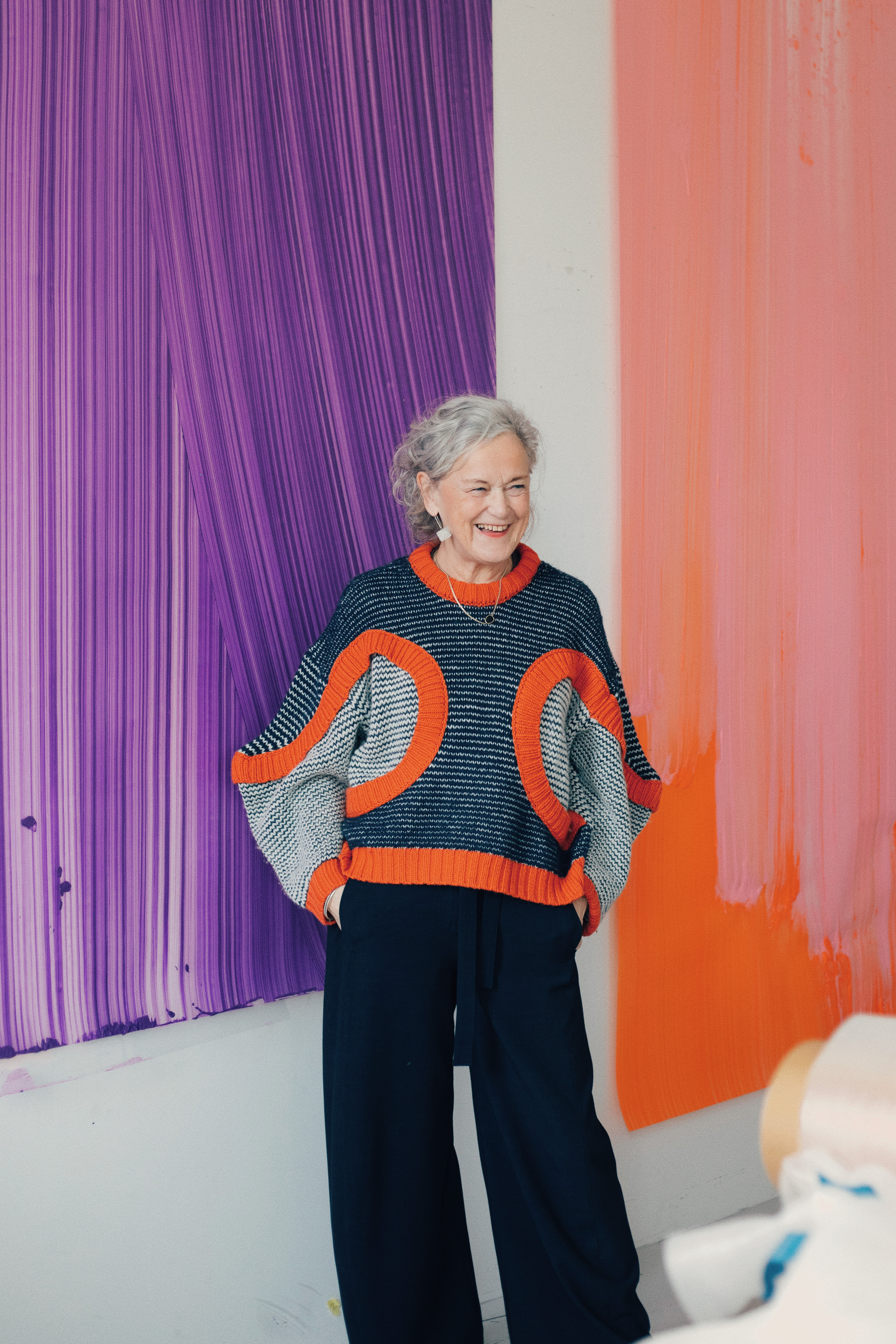
"I had cancer six years ago, and that changed my perspective on everything. I'm cancer free now, but ever since, I've felt much more aware of how lucky I am every day — satisfied with my life, happy with Michael, my husband of 30 years, and just generally more accepting. It's been a strange kind of education about life and what it hands you, even if it took cancer to get me there."
Standing in front of Campau's work, you begin to realize each painting is a statement on discipline. Repetition isn't a failure of imagination; it's its deepest expression. Good intentions, sustained across years, crises, and the occasional decade of self doubt, do eventually lead somewhere, but only if you keep moving. Yes, you can look back, linger in the review mirror, regret parts of your past, but the world will keep moving forward, regardless.
Campau has been making this argument since she was twenty-one years old, driving through the American Southwest with the windows down and everything still ahead of her. She is still making it at age 71. Keep doing exactly what you want to do.
“If I was to die tomorrow, I am very satisfied with what I have done, but of course I would like to do more, and I would also like more challenges, they are always a good thing.”
Ruth’s paintings are proof of life. As long as we see the forward motion of her iconic brushstroke, we know she is still walking forward.