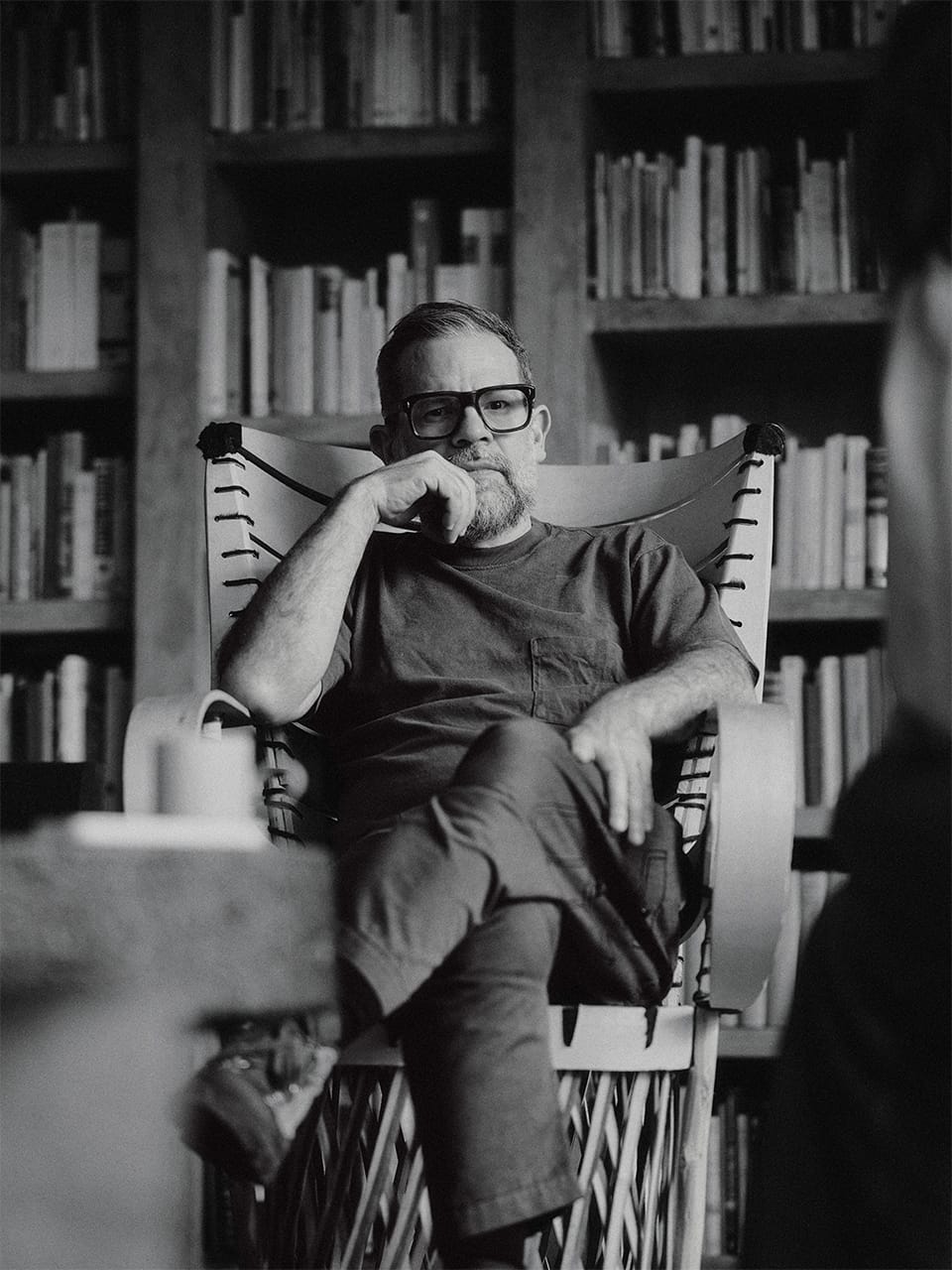
A conversation with PEDRO REYES

On tools, time, and transformation — how art becomes civic action.
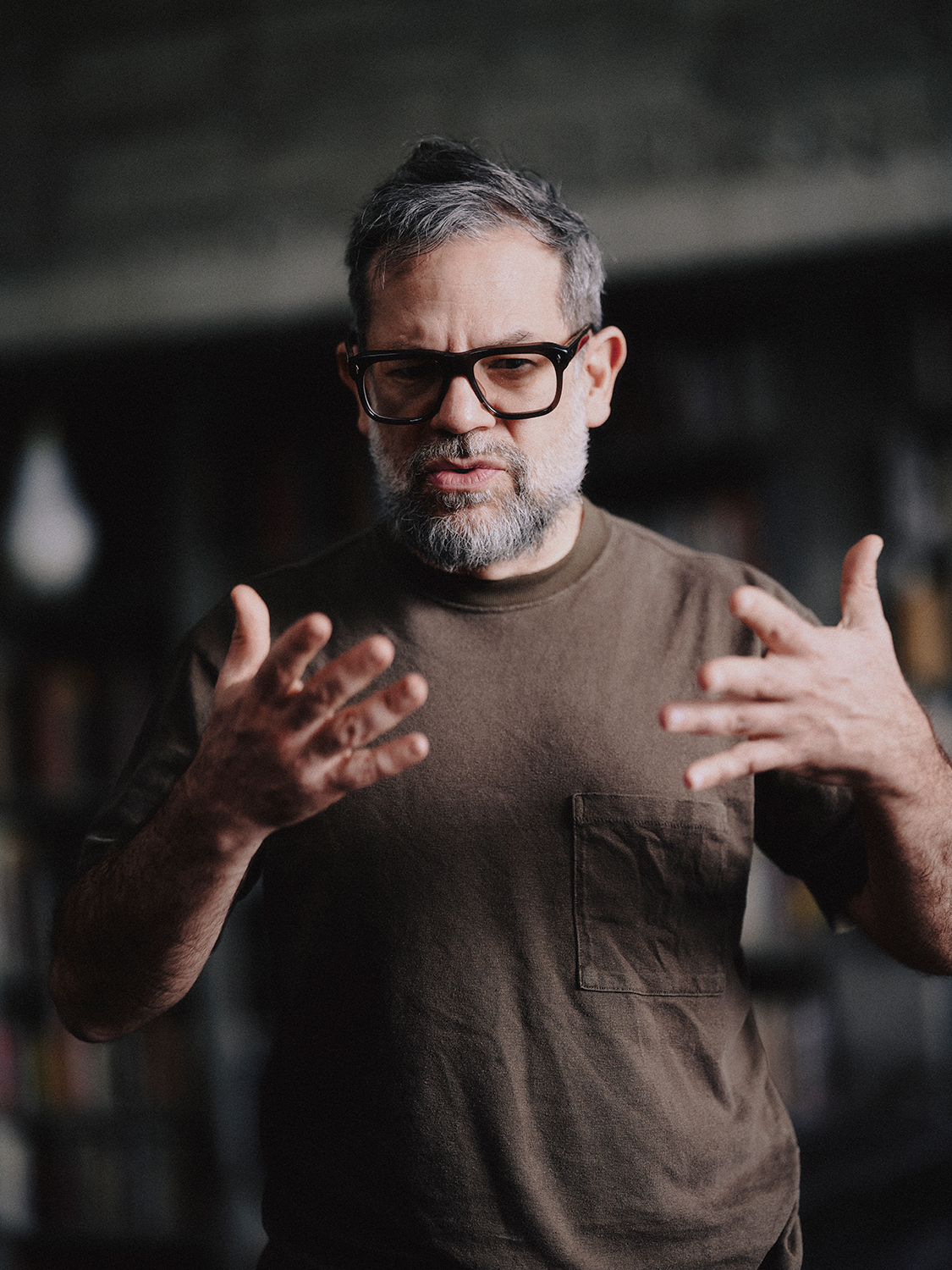
Time is not a dimension Pedro Reyes aimlessly walks through. Time, like a tool, is something to be used, a function for reaching new ground. It is this orientation towards time that underpins the range of his work.
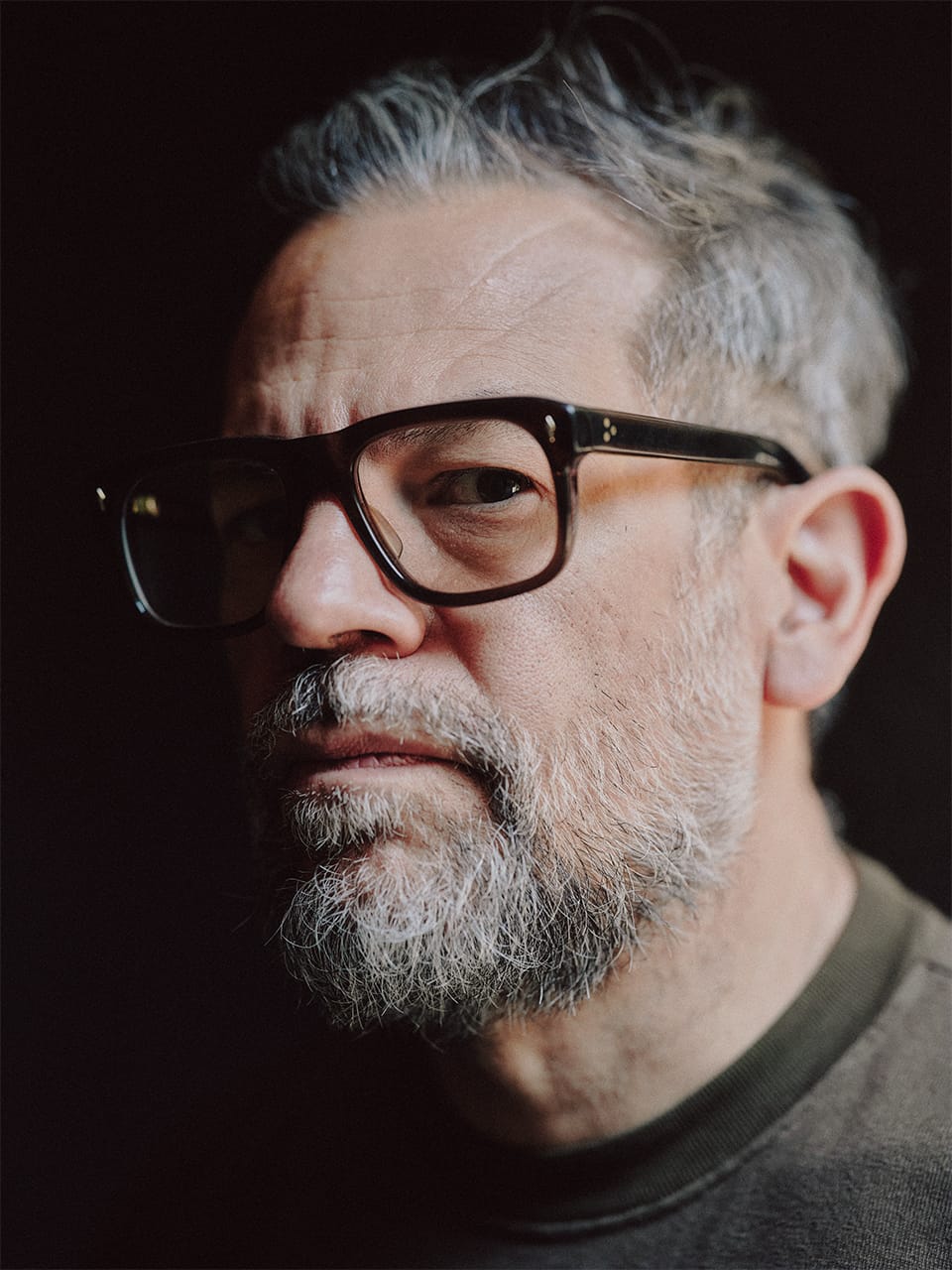
Born in Mexico City in 1972, Pedro Reyes is a man who is undefinable. Just when you think you’ve understood the focus of his practice, he turns toward another discipline and inhabits it fully. Artist, architect, teacher, actor, director, screenwriter, publisher, puppeteer, psychologist, policy maker. Reyes’s movement is not restless ambition, nor a bid for recognition, but a sustained inquiry into what each medium can make possible. At heart, Pedro Reyes is a pedagogue. He understands that people learn - and change - in different ways, and so he works across forms, willing to test whatever language or structure might shift perception.
Best known for large-scale projects that address contemporary social and political issues, Reyes develops long-term interventions to encourage systemic change. From dismantling weapons, reconfiguring institutions, and designing participatory structures - all efforts are collectively directed toward reshaping the conditions under which we live together.
With work in the permanent collections of institutions from the Brooklyn Museum to MAXXI in Rome, and exhibitions at the Guggenheim, the Walker Art Center, Museo Jumex, dOCUMENTA and the Venice Biennale, it was to my surprise that he replied to my emails personally and promptly. An early indication that recognition and hierarchy do not separate Pedro Reyes from process.
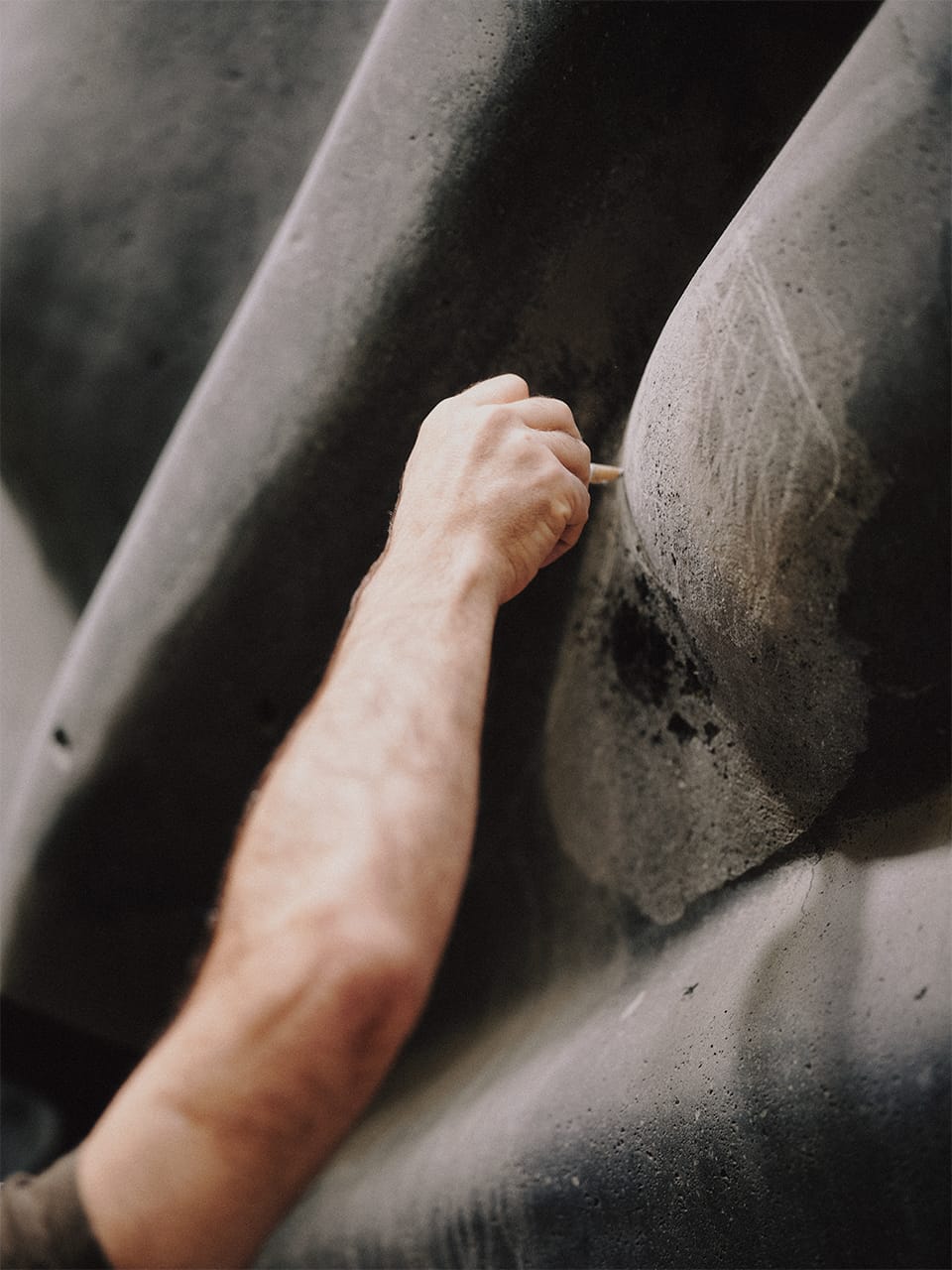
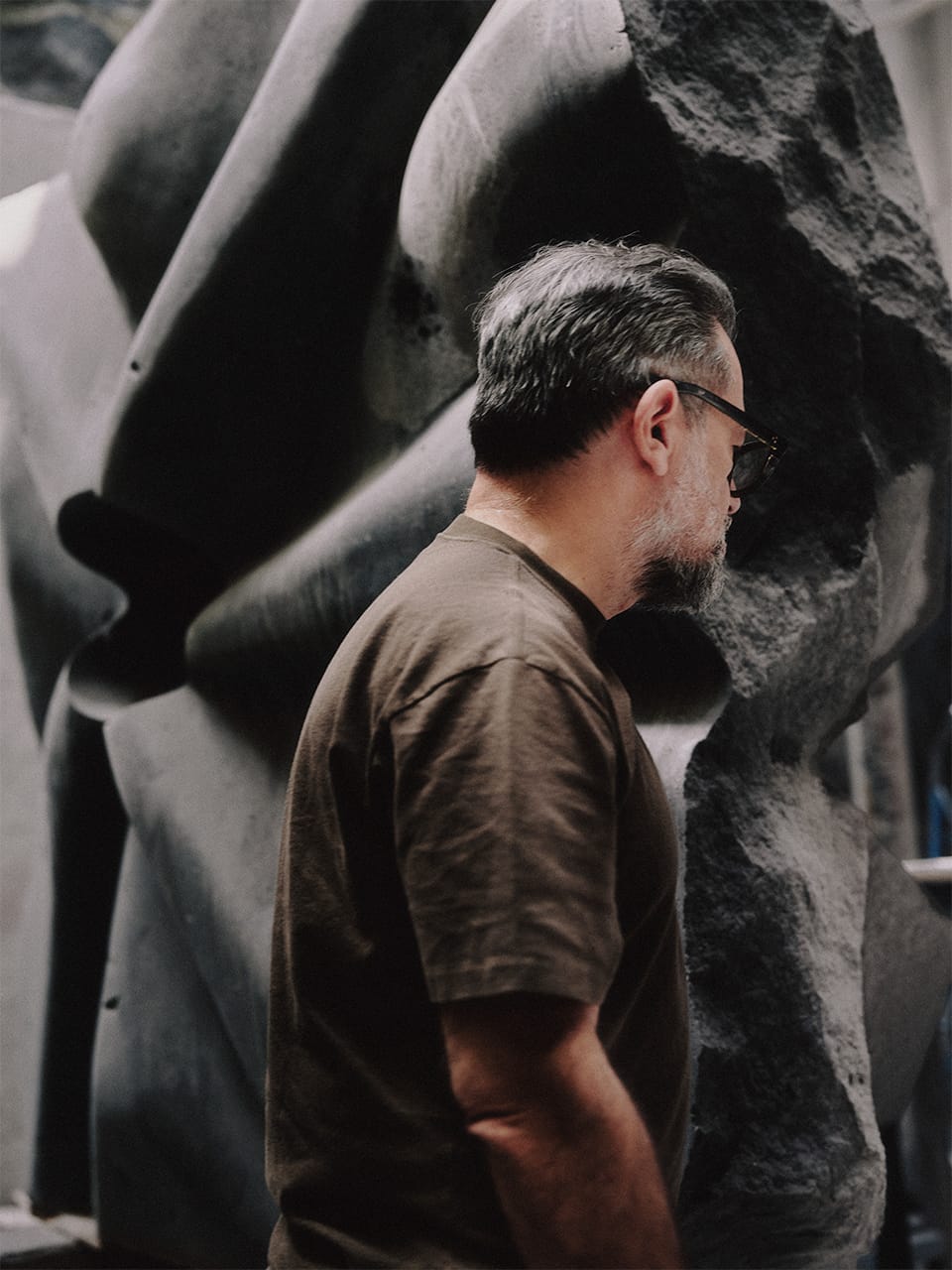
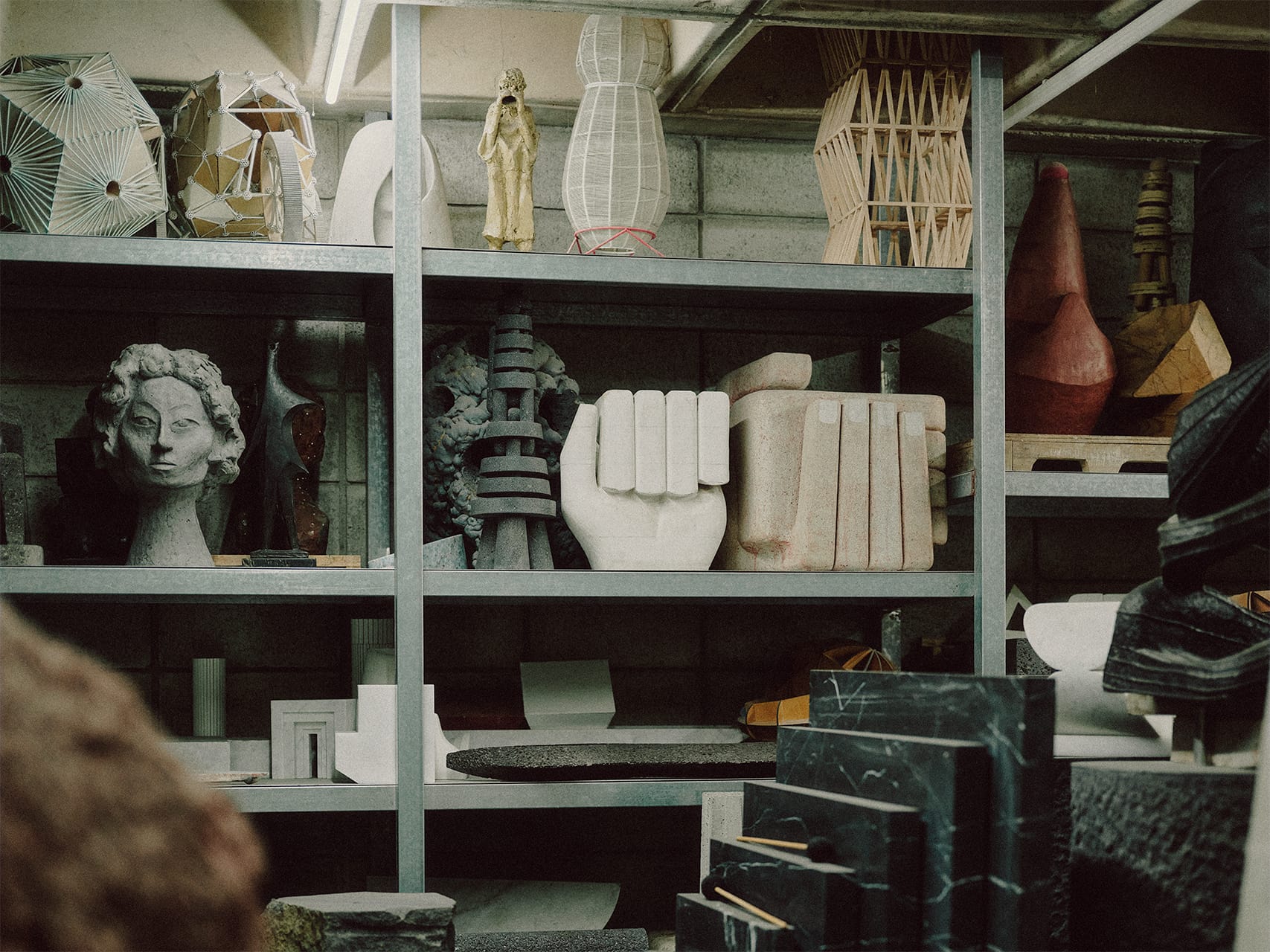
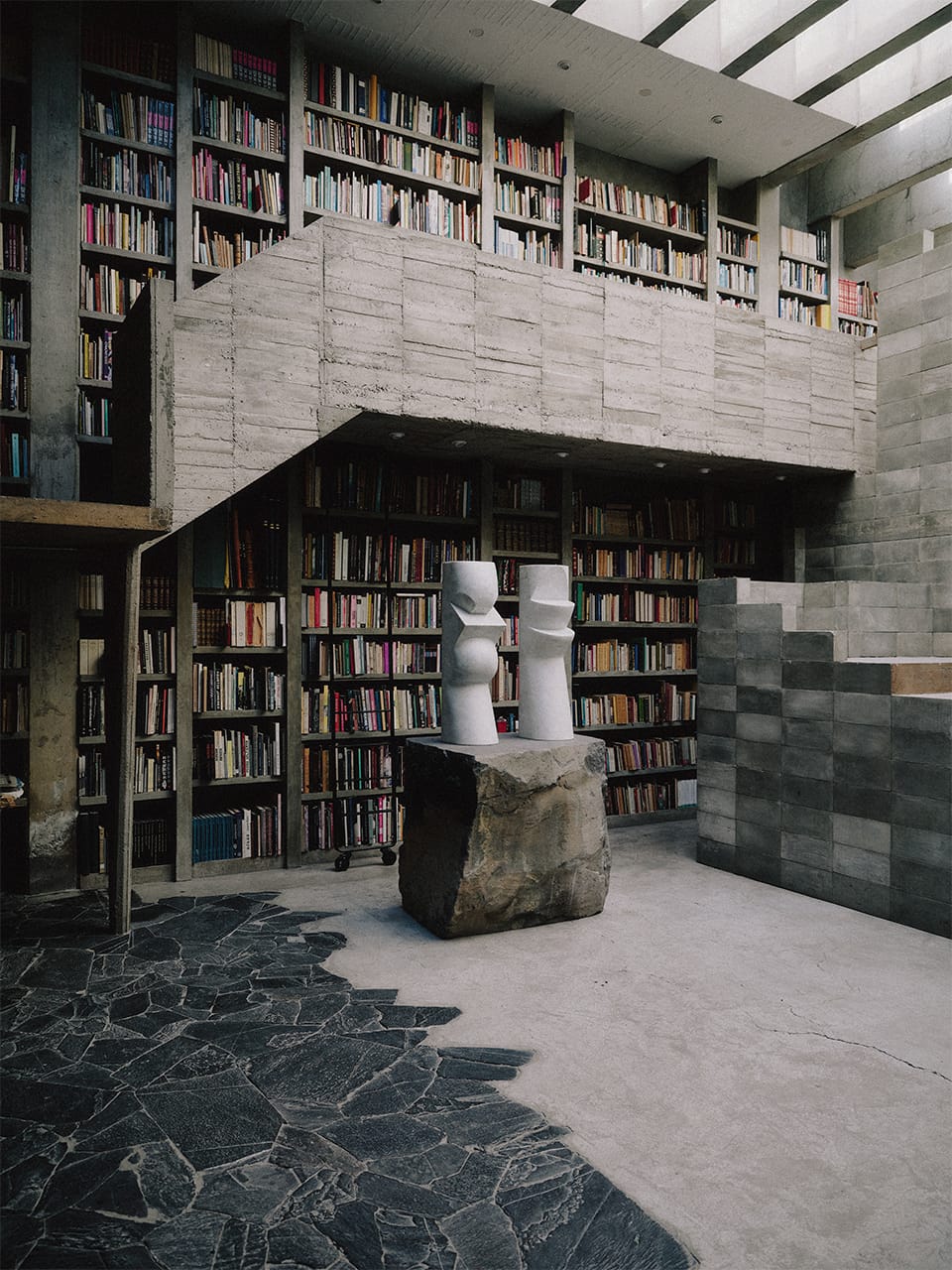
Reyes describes his practice as a system of “planets.” Disarmament is one planet, the long-running work of transforming weapons into instruments and tools for collective action. Architecture and design form another. Publishing and the stewardship of his 40,000 volume library constitute a third. Stone carving stands as an entire planet of its own. Theatre, puppetry, mental health initiatives, and nuclear documentaries occupy their own orbits. Each operates with its own gravity.
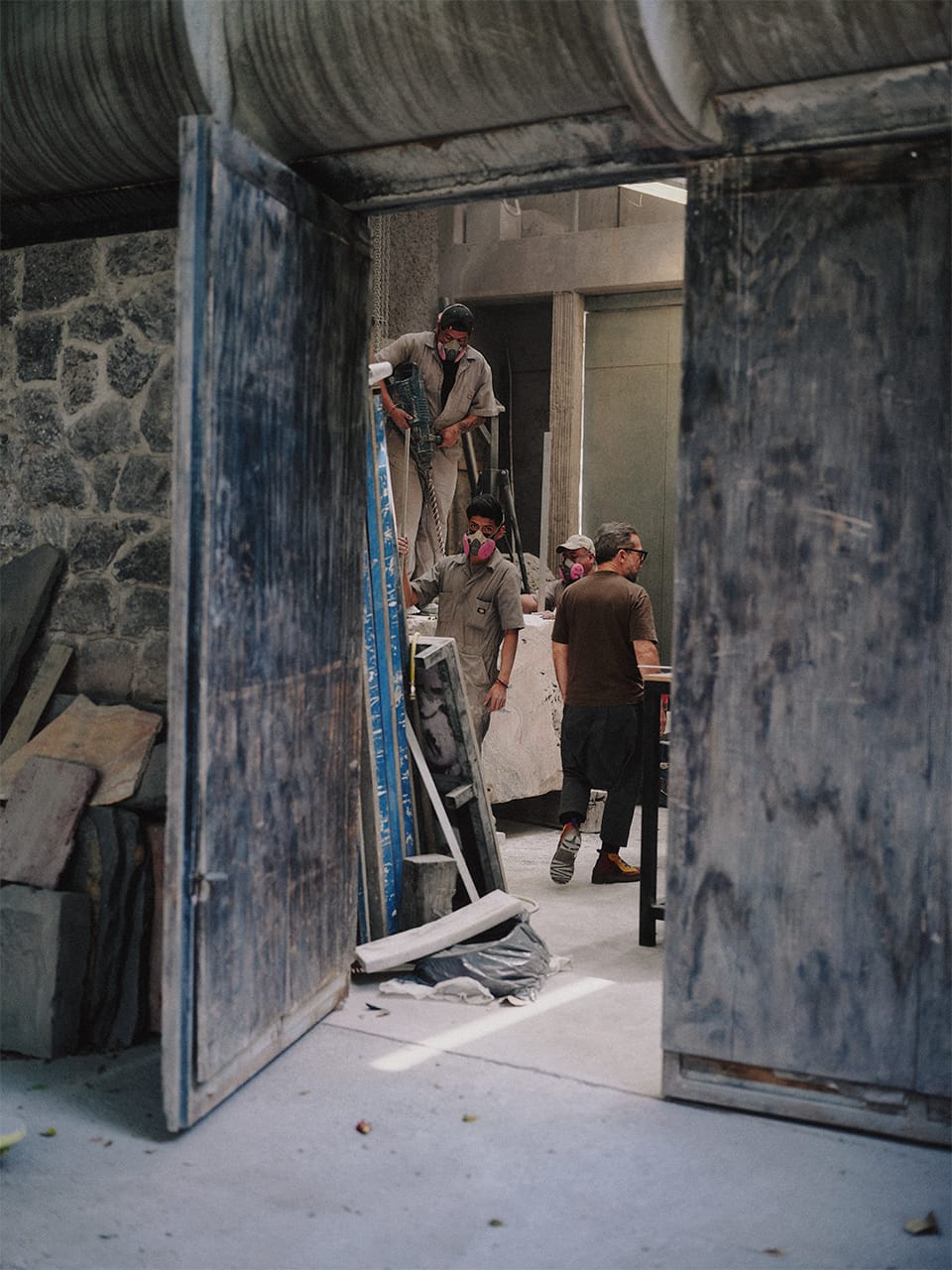
In his studio, these planets run simultaneously, with teams devoted to each - a librarian, a curator, an architect and production manager, a film lead - while Reyes moves between them in brief, rotating exchanges. “I have at least five planets running at the same time,” he says. It is less a chain of command than a choreography of motion.
“The idea of having these different planets is because I don’t want to be pigeon holed. For people to identify me with only one particular way of working and being.”
A particular piece of Pedro Reyes’s that utilizes almost every element of his ever-expanding disciplines is his Sanatorium project. First presented at the Solomon R. Guggenheim Museum in 2011, Sanatorium is one of Reyes’s most conceptually expansive works, a participatory installation that reimagines the museum as a temporary clinic for emotional and social health. Visitors enter a staged “medical” environment staffed not by doctors, but by trained facilitators dressed in white coats, who administer short, playful “treatments.” These range from guided confessionals and trust exercises to collective drawing and psychodramatic role-play. They are not designed to diagnose or cure, but using Reyes’s interest in psychodrama therapy, they rehearse alternative forms of communication.
As you move through each room, the encounters begin to accumulate, provoking questions such as, Who are we? How do we want to live? What trace would we like to leave?
The seeds of this approach can be traced back to Reyes’s own Montessori education, a system that privileges autonomy over imposed order, and experimentation over rigid instruction. In many ways, Sanatorium feels like an adult extension of that philosophy: a space structured enough to hold participants, yet open enough to allow them to become active agents in their own emotional and social experimentation.
That said, Pedro is slightly wary of the word ‘experiment.’ “I think the term ‘Experiment’ is used to conceal a lot of mediocre work. Of course transparency creates trust and so on, but it would not be responsible for me to put on an exhibition of works that are incomplete, particularly with the themes that I am working around.”
Reyes conceived Sanatorium as both critique and proposition. If society is unwell, perhaps the museum can become a site not only for viewing art, but for practicing repair. Drawing from traditions of group therapy, theatre, and participatory pedagogy, Sanatorium collapses the boundary between spectator and participant. It embodies Reyes’s belief that art should not simply represent transformation but stage it - even if temporarily - and that meaningful change often begins with action rather than resolution.
In 2008, three years before the Sanitorium project, Reyes initiated Palas por Pistolas (Shovels for Guns), a voluntary donation campaign that collected 1,527 firearms. The weapons were melted down and recast as the same number of shovels, which were then used to plant 1,527 trees. Destruction was redirected into growth. That gesture expanded in 2012 with Disarm, when 6,700 weapons, donated by the Mexican army, were transformed into musical instruments. The project now exists as a travelling workshop, where teenagers and young adults dismantle guns, build instruments, and compose pacifist songs, turning tools of violence into tools of sound.
“There are themes that feel contemporary to me, but people don’t necessarily hold them in their minds. Nuclear weapons, for instance, it’s a subject that is very present today, yet people are not paying attention. Part of my effort to highlight the risk of nuclear war has been to bring back the thinking that was developed around it in the 50s, 60s, 70s, 80s, and return it to the present. That’s the paradox, no? The present is full of distractions. Technology is often one of them. There are paths people fall for, and only 10 or 20 years later do they realize it was a total distraction. People laugh at NFTs now, a few years ago they took them very seriously. Or virtual reality. These are fads that come around every six years.”
“Omnipresent and boring” is how he describes this race towards AI and one he feels that with too much reliance will leave us feeling empty. We speak about the idea of being perceived as a luddite, someone that is against the evolution of the next paradigm.
“Yes, when the radio came into homes, people stopped singing, of course there will always be an atrophy, but I think people concentrating on occupying Mars is stupid, people running after crypto currency is stupid.”
“Artificial Intelligence itself, people think it’s a new thing, but this is something that has been around for 40 years… and technology presents itself as something that is always urgent and in need of attention, but it is a distraction. You have to live in the past to have the tools to be able to tell what is a distraction in the present.”
Distraction from what I ask? “The belief that you have to be up to date, that you have to catch up - that you need to spend time using these tools. It’s very risky. The more you focus on cutting-edge technology, the more time you invest in it, the more likely it is that in a year it will either become a gimmick or so ubiquitous that it is no longer interesting. The excitement passes. If you think about design and architecture, ten years ago the exciting thing was 3D printing. Now it’s considered just another tool - another printer. If your work is too tied to whatever technology happens to be cutting edge in the present, your creative contribution is doomed to become passé very soon.”
Where do you think scarcity will emerge? I continue. “Well, most of the time technology ruins everything.” Reyes begins, “The most dangerous development now is autonomous weapons. The decision to kill is no longer human - and that has been normalized. Some of the work I’m doing addresses the problems posed by autonomous weapons. I’m paying attention to the development of AI in weapons. These ethical discussions are not new; they’ve been around for some time. What is new is how present and ubiquitous these systems are becoming, along with the concentration of power they enable. These are very real threats - to human relationships, to wealth distribution, to freedom of speech.”
When I ask Pedro how technology has been of benefit to his life and work he responds by saying “Technology is like a prosthetic, like a crutch, if you use these crutches that you don’t need, you will soon enough grow a dependency, and an acquired disability. What is going on is that we will be losing cognitive capacity the more that we outsource our thinking processes to AI, and depend on that. In general terms, I use technology all the time, but what I am not is a techno-enthusiast.”
Pedro grew up in what he describes as a “serious” household, saying that he got his humour from his friends. “My parents were both chemical engineers. They were very specific, scientifically, and saw the world through this lens. They even judged each other's emotions from a pH level - if a body is more acidic, what state of mind does that put them into, for example?”
His childhood was split between two libraries. His father’s shelves held science - order and measurement. His mother’s held the humanities - ambiguity and narrative. It was her books, he says, that “changed the way I thought and opened me up to new possibilities.” Structure and imagination were never opposites in his upbringing; they developed side by side.
“My father taught me to draw,” Reyes recalls. “If I wanted an idea to come to life, it had to be drawn first.” His father then graded these drawings for accuracy, an early discipline that prioritized precision over self-expression. Though he did not follow his parents into engineering, choosing instead to study architecture, the training was no detour. It became foundational.
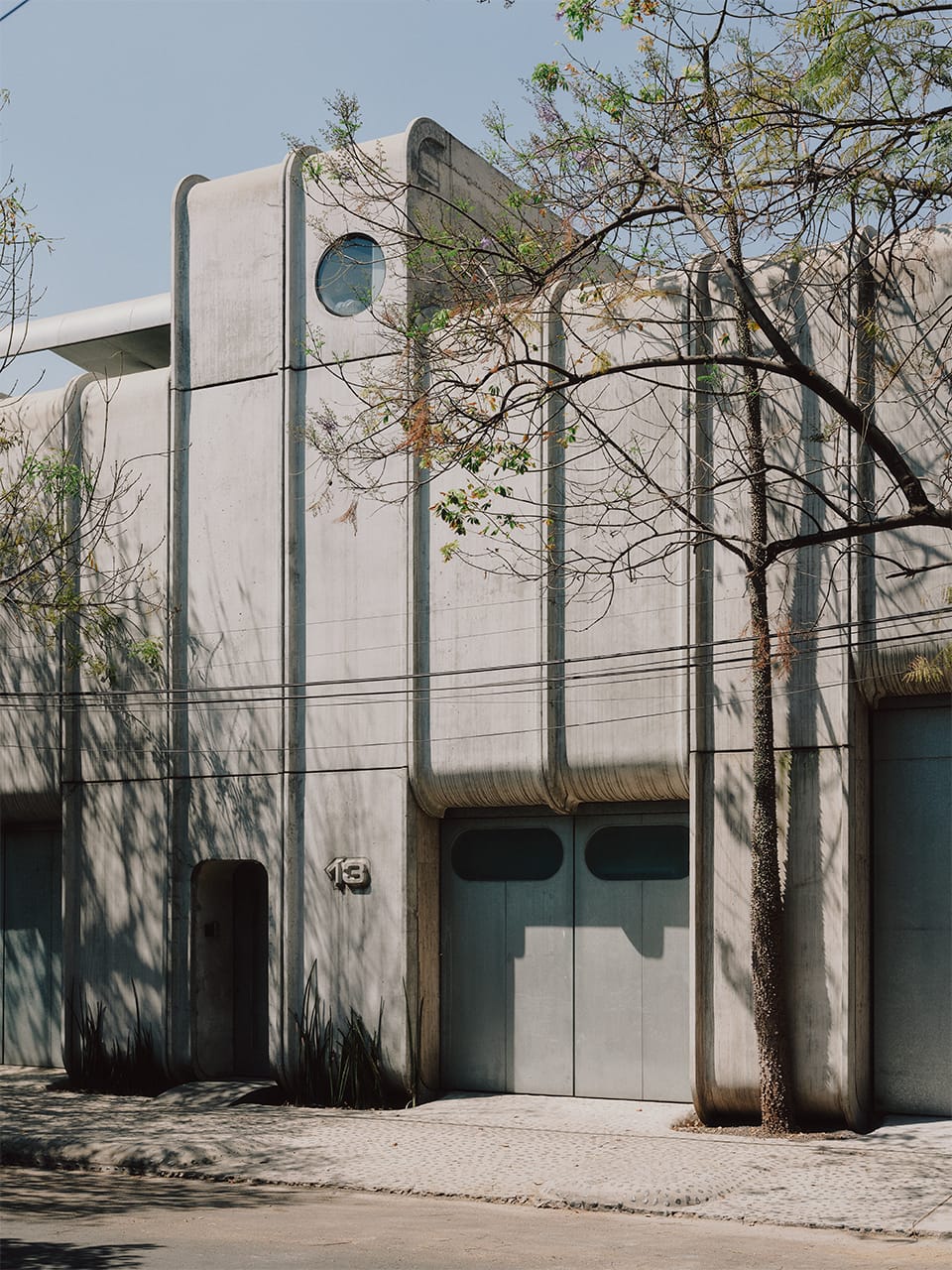
Today, he lives in a house he designed himself - a structure that has become architecturally revered far beyond Mexico, a piece of art in its own right. It stands as a continuation of that early lesson: draw first, then build. He lives inside a world he once sketched.
As a teenager and in his early twenties, however, confidence did not come easily. “I had to work through my confidence a lot,” he admits. At around twenty, he began buying Taschen’s 100 Artists books, carefully replacing a page with his own photograph, name, and description - inserting himself into the canon before anyone else would.
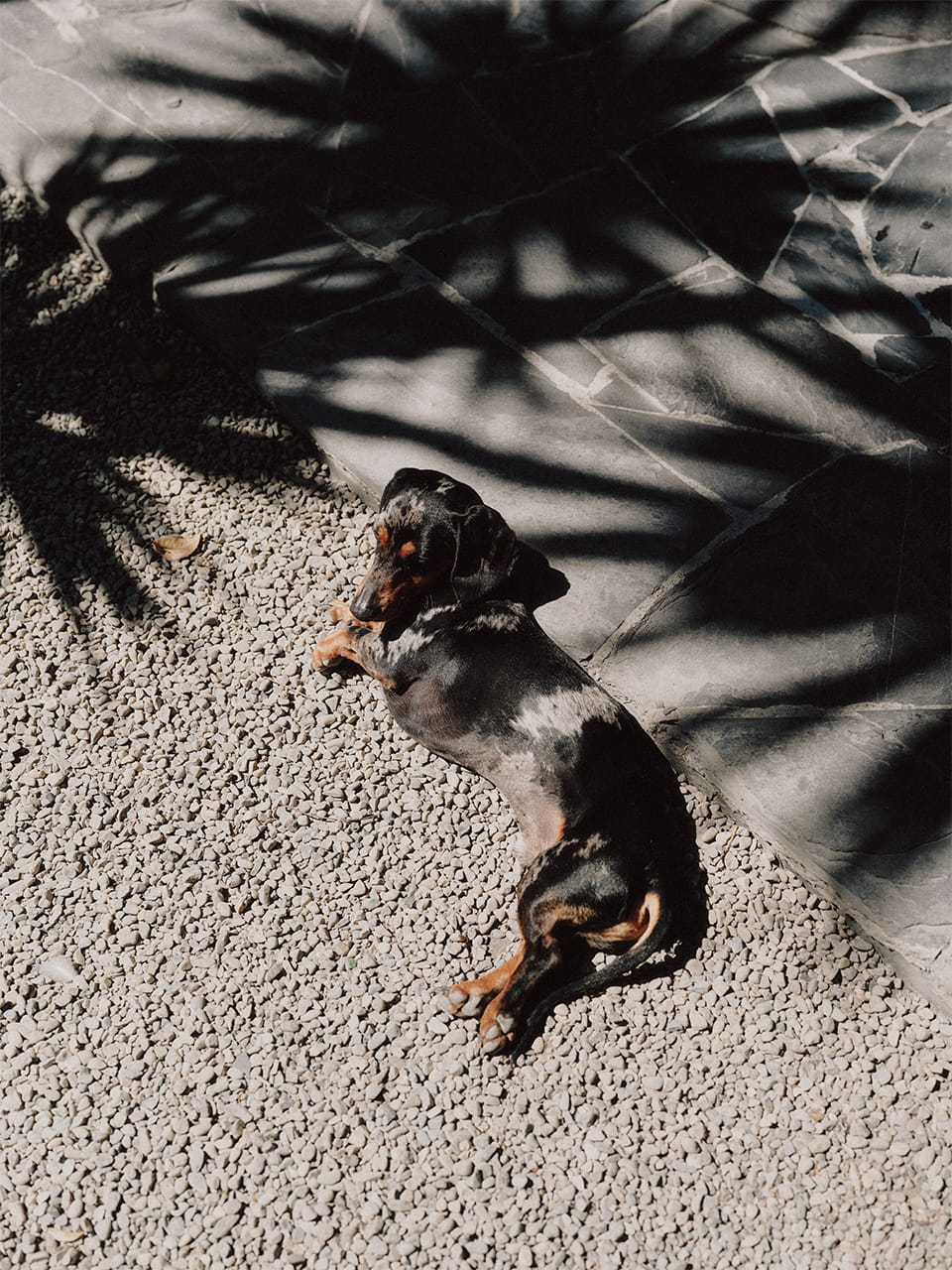
The idea of a person “arriving” in this world is a fleeting and futile pursuit, yet there’s still a belief that this moment will come. The idea that once you have a solid and rewarding career, a partner, children, a beautiful home and a Dachshund named Frijol, that you will land, and all of a sudden feel whole, have the necessary ground under your feet to push you forward. I am looking at Pedro like this, not in a form of flattery but fact. Reyes responds smiling, simply saying “We can always do more.”
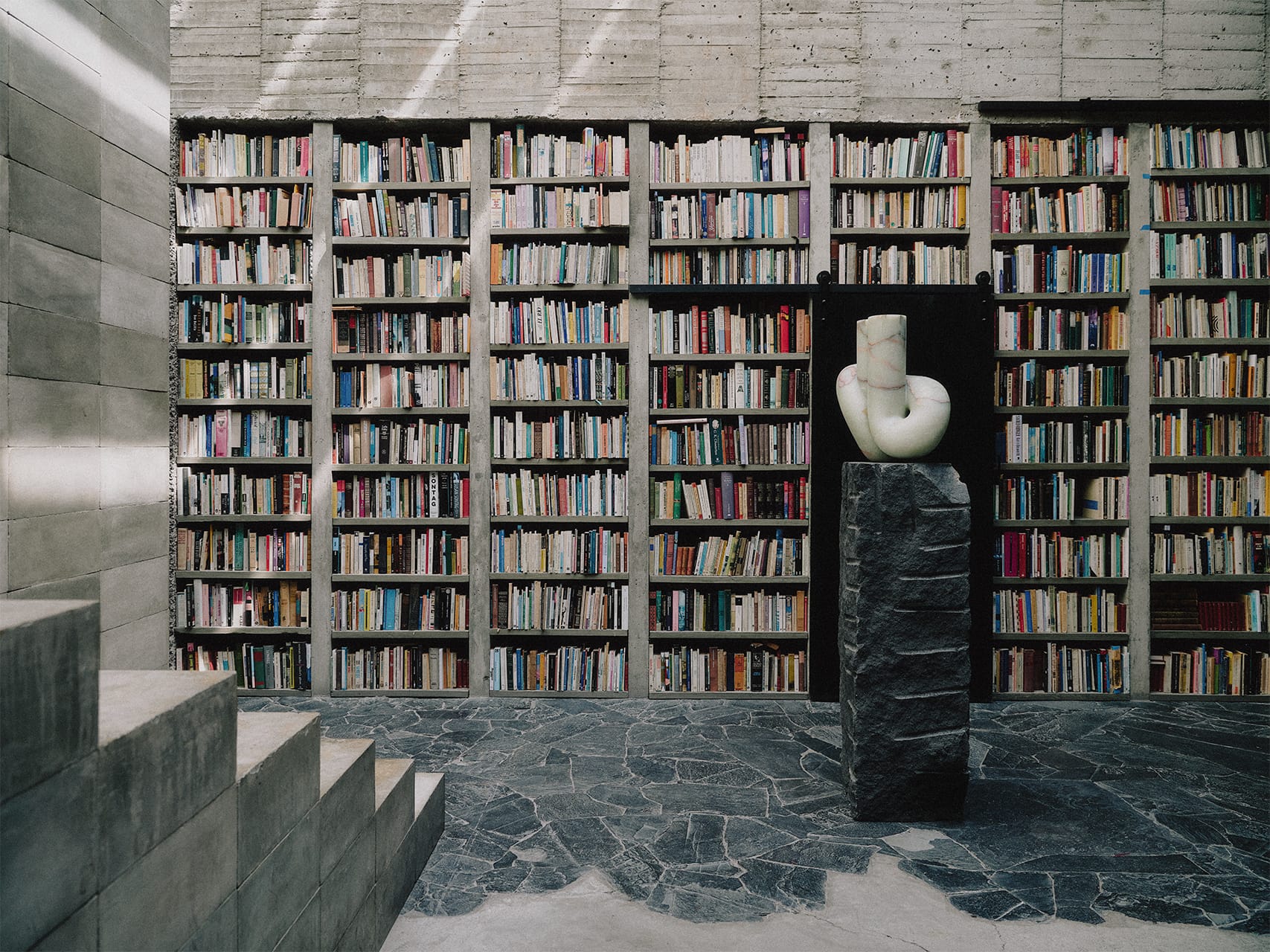
And yet, his home is not a final fortress of grandiosity for him and his family alone. It is a continuation of his values. The house - which holds his studio, workshop, his family life, and his vast library of books - does not exist as a private monument to success. The library, for example, is not for him alone. It is open and actively used, circulating beyond the confines of the house. What could easily become an archive of personal accumulation instead operates as a public resource, a working library.
The space behaves less like a retreat and more like a live environment, constantly evolving through the people who pass through it. Students, collaborators, neighbours - each enters into something already in motion. His home, like Sanatorium, is not static. It is a rehearsal ground for the kind of civic life he believes in. In a time of tightening borders - territorial, institutional, ideological - this insistence on permeability feels culturally specific and necessary. Even here, in the domestic sphere, he refuses exclusivity.
Time underpins all of Reyes’s projects - in the urgency of disarmament, in the patience of the built environment, in the discipline of drawing. Inevitably, it becomes the subject itself.
When I ask Pedro about his relationship to time and mortality, he turns the question back to me. “Why are you interested in death?” he asks. I tell him I’ve always been preoccupied with finality. Time is irreversible, you rarely recognize the last conversation while you’re still inside it. When someone is gone, their work remains, but the possibility of their next thought does not.
He tells me about a 98-year-old writer who lives nearby in Coyoacán - a friend whose work he deeply admires. When Pedro suggested seeing him in a few weeks, the writer insisted on sooner. At his age, he said, one does not postpone conversations unnecessarily.
“Older people are the real fountain of youth,” the writer once told Reyes, “because they have a pre-internet brain… they are not touched by all we are touched by.”
That phrase stayed with me, not only because it’s the genesis of The Butter, documenting the lives of artists that grew-up offline, but because it’s a “species” of human that is dying off. “Pre-internet brain” speaks less of nostalgia than of attention, a mind shaped before constant interruption, built through discipline rather than a desire for exposure.
That sensibility feels close to Reyes’s own. His work demands participation and presence; it moves from idea into material form and civic action. When he speaks about death, it enters the conversation as another condition to prepare for - something to be accounted for within the same ethic of responsibility that shapes his work.
Reyes does not describe legacy in grand terms. Instead, he speaks of order: his library, the policies he will help shape, the public spaces still underway. There is an energy about him that feels continuous, as though what he builds has been assembled with the expectation that it will outlast the moment of its making. If time cannot be reversed, it can at least be met with responsibility.
Ask Pedro Reyes the questions that Sanatorium poses — Who are you? How do you want to live? What trace do you want to leave? — and I trust he will not pause, but answer fluently, with a clarity that reaches beyond the individual toward the collective. If only we could say the same of those who currently hold the world's power.