A conversation with PEDER RASMUSSEN

On repetition and refinement — how time shapes form.
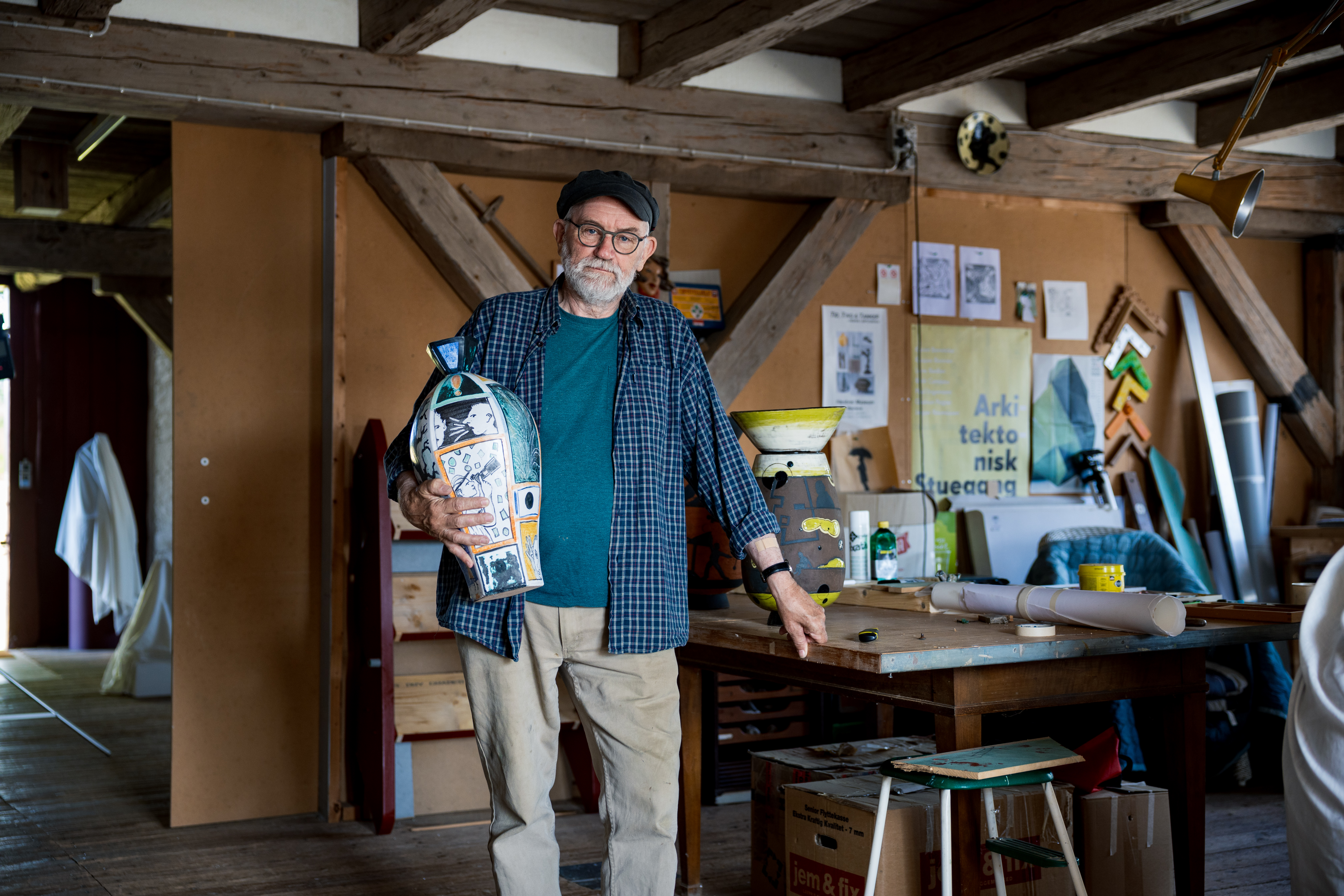
“It was always there,” Peder Rasmussen says of his artistic focus. “I don’t recall an entry point where a teacher told me to draw more. I can’t remember it not being there.”
As a child, Peder’s impulses were already physical. “I liked breaking windows, throwing stones and watching the glass shatter. I loved that. It was very primitive. Without any sophisticated tools I could make something happen.” He laughs at the memory. “Of course I got into trouble. My father saw something that had to be paid for. I saw something that could be made to happen… I don’t see much difference to what I’m doing now. You sit there with your tools and materials and you adjust — a little higher, a little wider, a little more blue — and suddenly there’s a piece that didn’t exist before.”
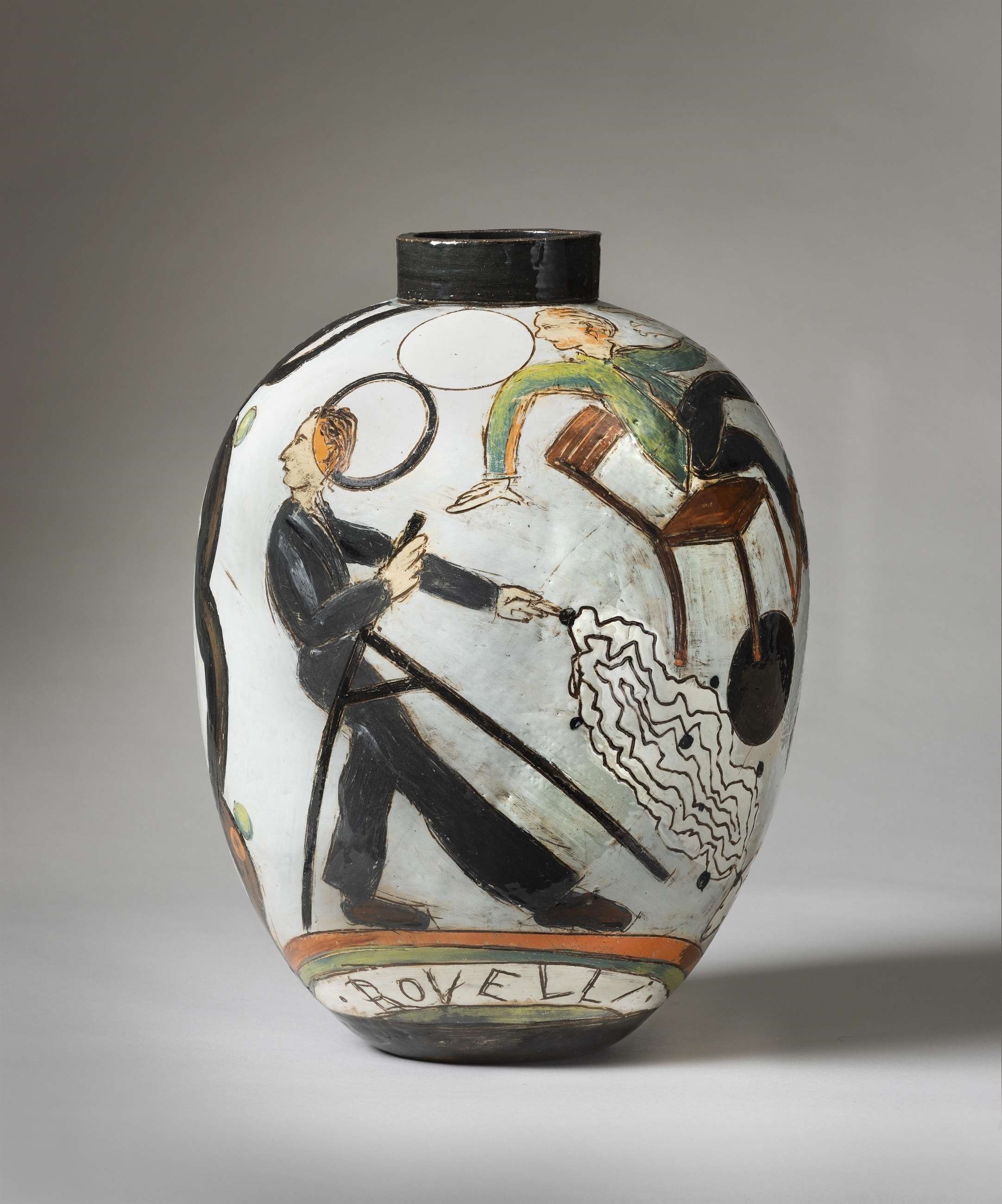
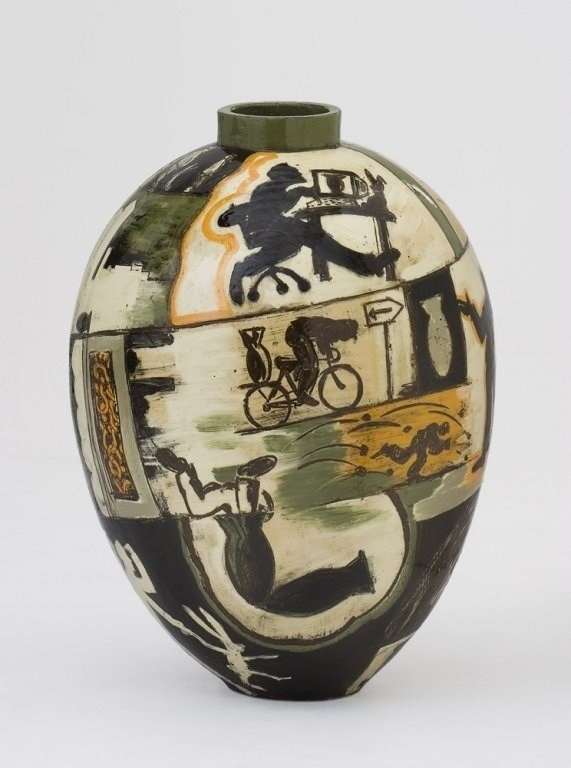
Once you’ve been in the presence of work by Danish artist and writer Peder Rasmussen, not dissimilar to meeting the artist himself, they’re hard to shake. Beyond his discipline, craftsmanship and precision, it’s his stories and humour that play out across his pieces that stick. Humbly referred to as “picture vases” each work is painted and animated with narratives made up of moments suspended in time.
“My work is based on the discussions I'm always having with myself. Making one piece brings you to the next… you can tell your story through your work simply by continuing to produce.”
Peder gestures toward a 2023 piece depicting the Italian physicist Carlo Rovelli suspended mid-air — flying, or perhaps falling. It references Rovelli’s 2017 book The Order of Time, which proposes that time, as we understand it, may not truly exist. In the work, chairs drift in orbit around him.
“What would happen if you invited Rovelli to dinner?” Peder laughs. “If time and gravity are abstractions, how would that even look? Time is an agreement we make with each other,” Peder continues. “Of course we need appointments. But ultimately, time doesn’t exist.”
To understand his pieces you must circle them for the story to unfold. Familiarity with their references may quicken understanding, but it is not necessary. The work communicates before it is decoded. To look at Rasmussen’s work and feel nothing would be rare.
I’d been circling Peder myself for some time too, trying to find an opening to meet him. It wasn’t until the summer of 2025, two years after I first attempted contact that he accepted. “I was busy!” He bellows, laughing down the phone. I told him he was being elusive. “I was not! Things take time. Well, I’ll see you tomorrow.”
Peder Rasmussen started his artist practice in Næstved, Denmark in 1966, and apprenticed for four years as a potter alongside Danish artist Herman A. Kähler. Since then, between the years 1981 - 2024, he has presented at least one solo show annually across Europe and sold work to over 27 permanent collections from the V&A Museum London, to the Designmuseum Denmark, Copenhagen and Nationalmuseum, Stockholm, Sweden. In 2019 he received the prestigious OJD´s Keramikpris, awarded by Ole Haslunds Kunstnerfond, one of Denmark’s long-standing private art foundations. In 1998, Peder was also the recipient of the Danish Lifetime Award, a grant that can only be passed on once one of the prior recipients dies.
Come January 2027, Peder and his wife and fellow artist, Karen Bennicke will present collectively at a dedicated show at CLAY, The International Museum of Ceramics in Denmark.
“At 77, I always think after my exhibitions, ‘Was that the last one’ but I am not that nervous about it. I see the art world moving in its own direction, and certainly I can easily see I am not the hottest shot in town anymore…”
On a perfect eighteen-degree Danish summer morning — Thursday, July 3, 2025 — my photographer and I made the hour-long drive south of Copenhagen to their home in Haslev. As the gravel sounded beneath our tires, Peder and Karen were already walking out to greet us. In true Danish fashion: punctuality paired with a positive misdemeanour.
“We have lived here for fifty-one years,” Peder says as we walk into the kitchen, just off the garden.
“We don’t own it though,” Karen adds. “We rent it from the Bregentved Estate, the local castle.”
“But as long as we keep it in better condition than we found it,” Peder continues, “they won’t ask us to leave, so we stay on.”
When they arrived, it was nothing — originally blacksmith studios. “Just four walls and a hole where the ceiling should be,” Peder says.
Half a century later, the place is almost unrecognisable.
Inside, their work is inseparable from their life. Ceramics, drawings and graphics sit among a substantial private collection of art and design. Iconic furniture and lighting sit alongside rarer, unexpected works, all pieces positioned with care, and a restrained reverence. I spot a painting by Thomas Bang hanging on the wall. “He’s a very good friend of ours,” Peder says. They have done the estate more than a favour; the house alone could function as a museum.
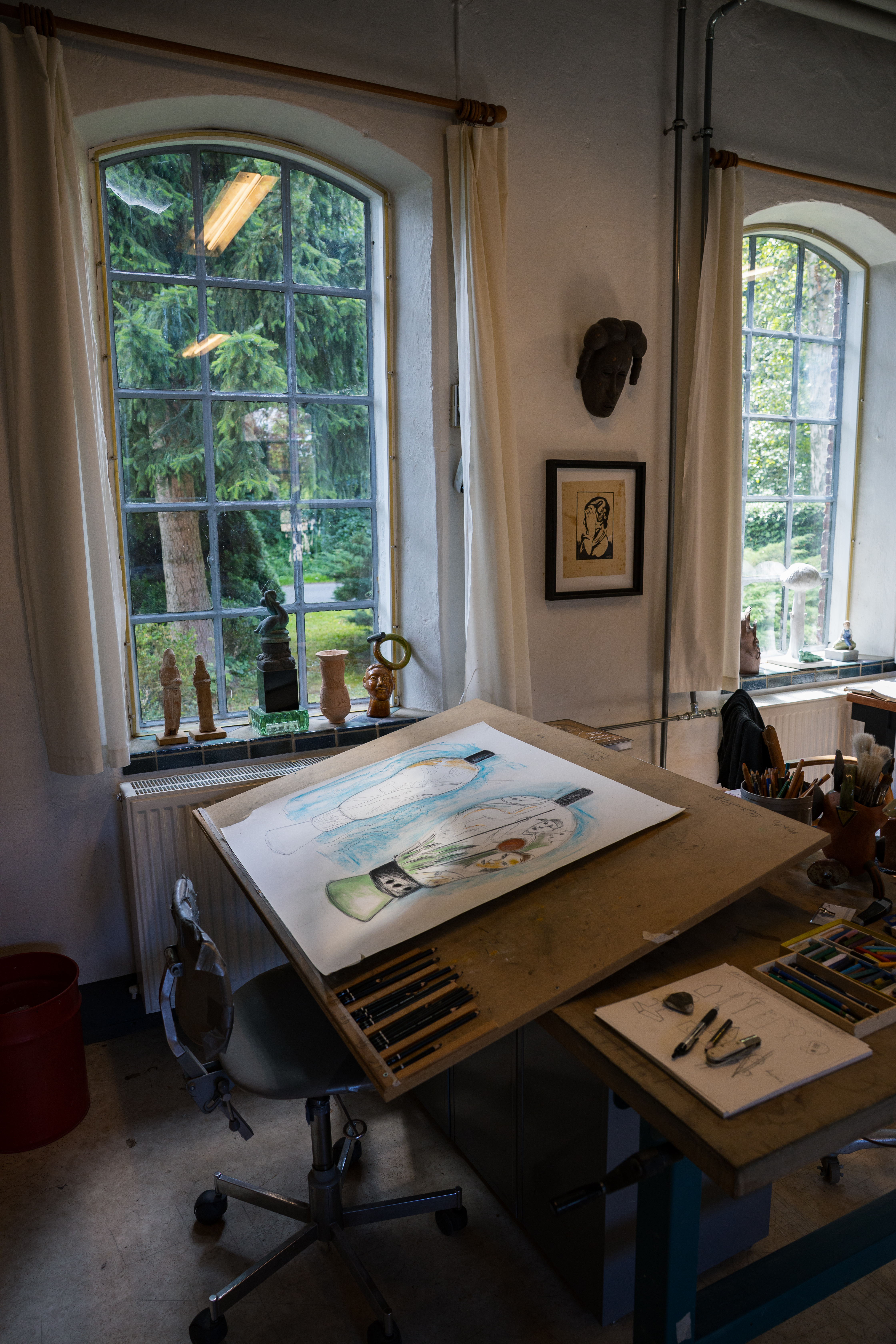
At the center of the main house is a shared studio: four desks — two for research, writing and administration, two working benches. If either of them wants more space, they walk the 350 meters down the road to another studio. “You can always change it. Nothing is steady here,” Peder says of the space. “We work all around the clock, so it’s good to have the studio attached to the house, close to the kitchen.”
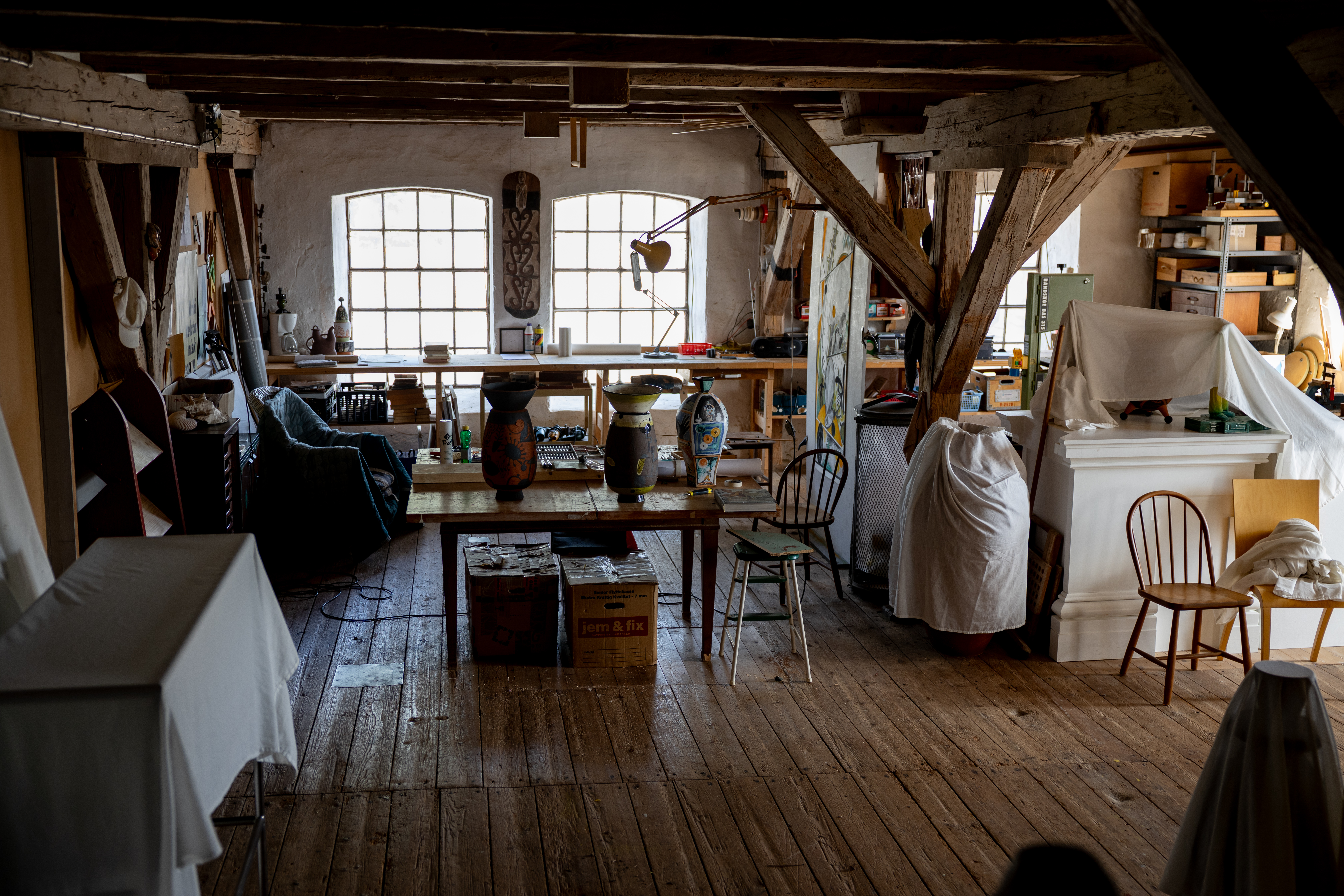
We take the short walk down the quiet road to the second building, roughly the same size as the main house. This is primarily Peder’s domain and where the majority of his work is stored here — an archive and exhibition space fully under their control.
“When you’re with a gallery, you don’t know where your pieces end up, or who the clients are,” he says. “Twenty-five years ago we started preparing for getting older — thinking about how to protect the work. We’ve seen too many older artists left with nothing once the galleries and museums stop calling. We wanted something stable. And the only real way to create stability is to do it yourself — to rely on no one but yourself.”
The first rooms are arranged like a private gallery: plinths, custom stands, careful groupings. The work meets you head-on. Then, as we move deeper, composition gives way to accumulation — hundreds of pieces slipping into shelves, stacks, and back spaces. We pass from the exhibition area into a workshop dense with tools. That’s when I notice the staircase.
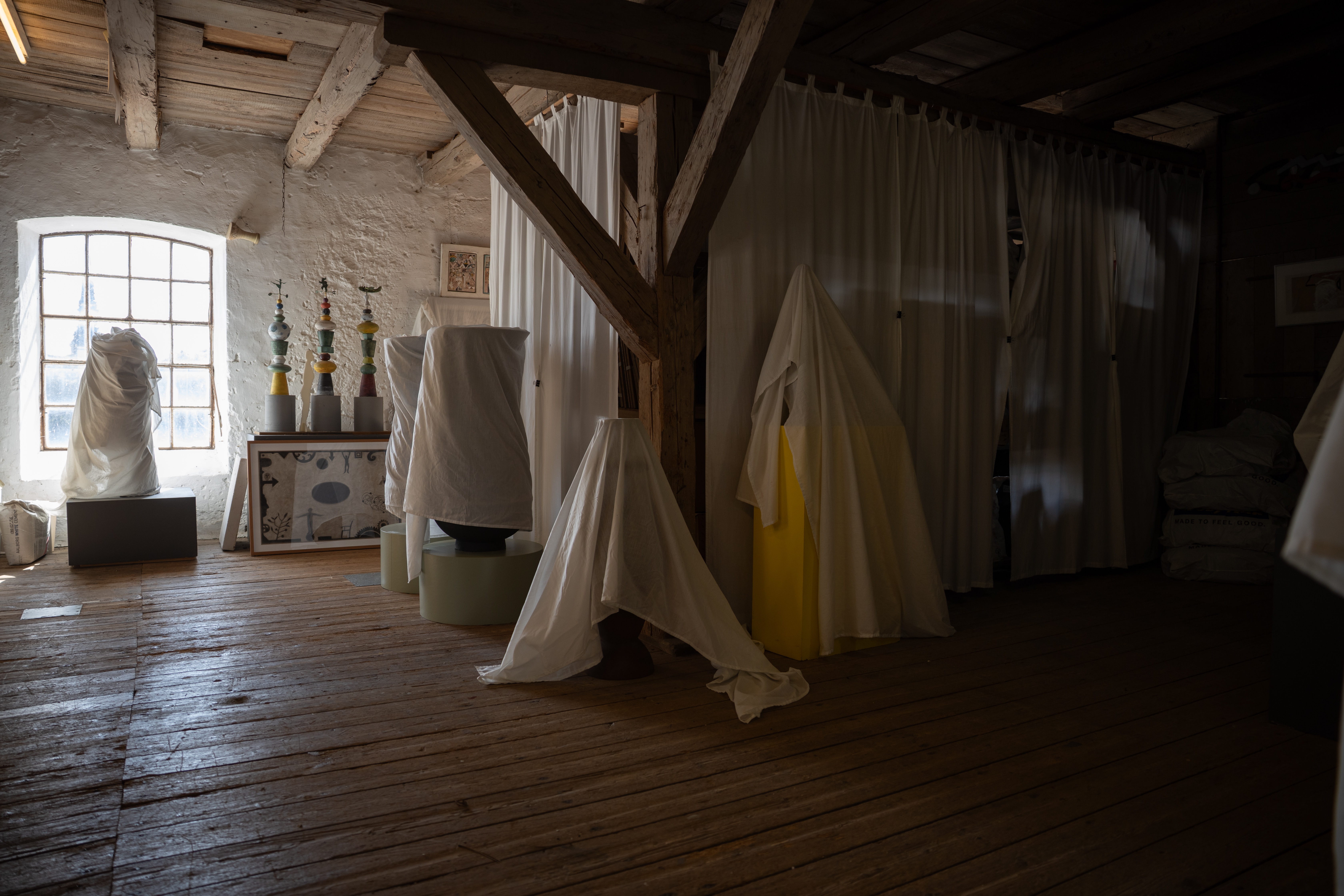
“What’s up there?” I ask. “More,” Peder responds, almost sheepishly. He lifts the trap door and flicks on the light. The upper floor feels less like a showroom and more like an attic — work covered and protected in cotton and plastic sheets. Even veiled, you can recognise the forms, the colour, his familiar motifs pressing through the layers. “All I see is all I know,” reads a David Bowie quote etched into a piece from the 1980s.
“This is where we store the pieces we ourselves would like to keep,” he says. Most date from the early years. Hundreds of them, hidden in the dark. “It’s completely stupid,” Peder says, shaking his head. “I can’t stop.”
Completely stupid is the opposite of what I am thinking.
“All these artists wondering what will happen to their work when they’re dead — it’s very decadent. We can’t worry about everything. The world is full of so much stuff — something has to be thrown out. And it’s not for me to decide. We have a daughter, and she said this will be the greatest flea market you ever saw… there’s too much.”
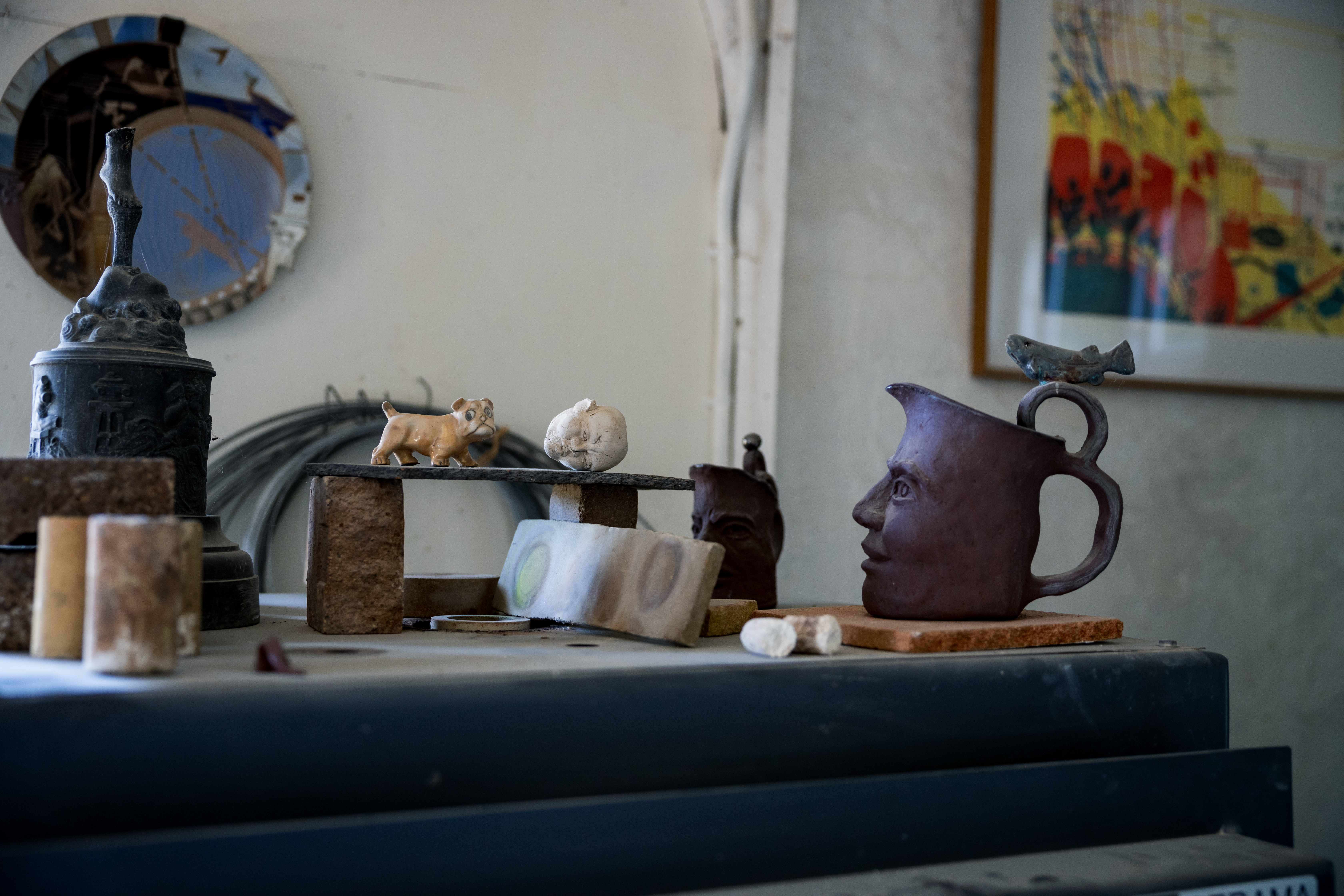
Peder and Karen sometimes lend works to prospective buyers. “Take the pieces home,” they tell them. “We’ll box them so they’ll travel safely. Live with the work, see how it feels. If you still want it, you can buy it. If not, bring it back.” The model only functions locally, but the gesture is telling: they want the work to land with people who truly intend to live with it, and in spaces where it can settle long term.
For Peder, this is the real measure. “Having things out in the world, being part of people’s lives - that’s the pleasure. Standing there, hanging there, inside someone’s daily life… it’s very nice.” He pauses. “We have works in museums too. But mostly they’re in the basement, in storage.”
What he resists most is the middleman. He wants to know where the work ends up, who lives with it, what draws them to a particular piece, information that disappears inside the gallery system and institutions. “It’s another world, galleries,” Peder is recalling a recent visit to New York. “Exhibitions every three weeks. Everything is constantly changing. People can’t even remember what they liked last month. If they want to come back and look again — ‘Ah, I still love it’ — next minute it’s gone. Back into storage, or wherever it ends up.”
He shakes his head. “We hadn’t been in New York for fifteen years. It felt completely different. Everywhere smells like weed, it’s so expensive. And in the art world — if something sells, they just keep making it. Like a factory line of ‘creativity.’ That’s the trap.”
In Denmark, he explains, there is another model. Artists form groups and rent large spaces — Charlottenborg, Den Frie — sometimes ten, sometimes forty artists at a time. “It’s slightly conventional,” he says, “but nothing you see is made for commercial purposes.”
He pauses, then adds a note of realism. “Of course, I would love to sell my work to The Metropolitan Museum of Art - it’s my favourite museum. But the reality is the piece might appear briefly in an internal announcement, and then most likely disappear into storage. You end up riding the attention of something that isn’t actually being seen.”
When I tell him that The Met is said to have only four percent of their collection on show, he’s not surprised. “Having an archive completely digitized, online for all, should of course be an obligation, at minimum for these institutions. The possibility for people to get access to certain research and education is a necessity.”
Many artists say, “It’s not about the money.” For some, that’s true. For others, sales are a matter of survival — not ideology. For Karen and Peder, however, the statement carries a different weight. After decades of work, and with a stable home life, financial pressure no longer dictates their decisions. “It’s not about the money,” Peder says — and in their case, he means it.
“We’re not getting any younger, and the art world is changing, and you can’t stay hot shit all your life.” I tell him I still think he’s hot shit. He said he agrees, smiling, but the galleries that they used to work with have either stopped, or the founders have died. “They’re looking at the younger generations now, the up-and-coming.”
He goes on to say, “Look, if somebody is interested in us, just say, and we’ll bring out the famous stuff we make,” Peder says, Karen laughing beside him, “we expect to get a call from Gagosian tomorrow, from Larry directly, please!”
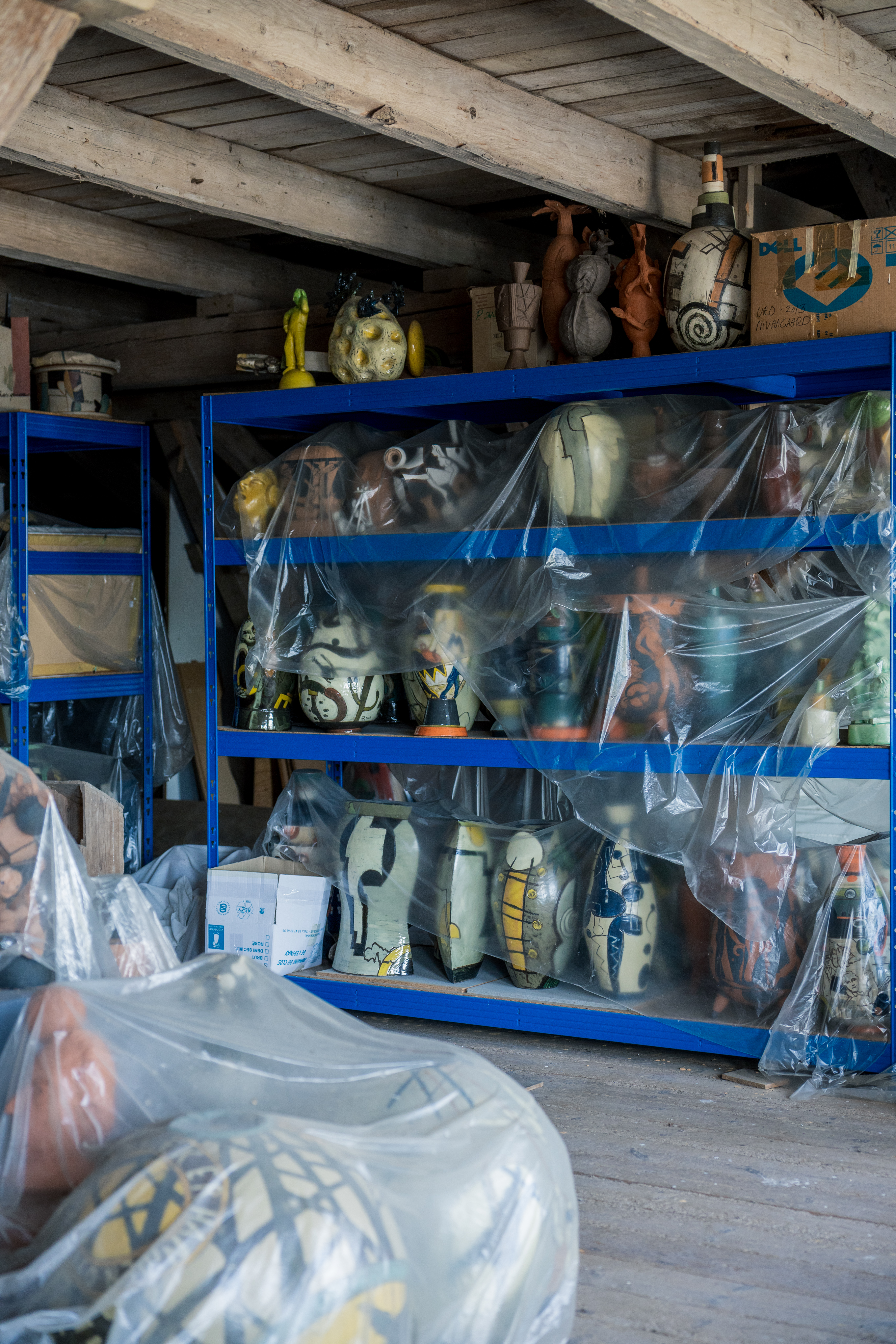
The word “prolific” is thrown around a lot in art, particularly with an artist as dedicated and disciplined as Peder Rasmussen. There’s no sense he would ever reach the end of his life wishing he had done more. Standing in his archive, I can’t shake the feeling I’ve encountered something familiar: another artist who is fully realised in his lifetime, yet whose scale may only be understood in retrospect.
“That’s the problem with working this long, you're always confronted with your past. When you’re young, you’re thinking about the ten pieces you’ve just made. Now we’ve made hundreds.”
“Sometimes I see one and think, ‘Jesus, did I really make that? Was that a year wasted?’” He shakes his head. “No, not wasted. But sometimes I look at something I spent so much time on and don’t quite understand now, and I think, ‘Maybe I should have taken a holiday… But they’re necessary.”
“I really enjoy just getting into it,” Peder says. “I prioritise having time to work. I was saying to Karen the other day that I have new ideas for pots. All this drawing has developed new motifs. But it takes time for them to carry enough weight before I make the piece — before I bring it to the pot. It’s not a production line, when it’s ready, it’s ready. We’re just working. That’s it.”
Some artists are mythologised in death, their value rising in ways they never experienced while alive. “Incredibly prolific” becomes the headline — an ideal position for a gallery able to acquire an estate, knowing the depth of the archive can sustain years of distinct retrospectives. Abundance becomes strategic.
By contrast, older artists still living are treated differently. The question becomes: why this artist, and why now? If the work has not yet been fully absorbed into the market, how do you suddenly frame it as essential? In death, rediscovery feels romantic. In life, it requires explanation.
And yet the hesitation is less about production and more about narrative. Artists can be repositioned at any point — it takes a well-written press release, a strategic gallery, a handful of committed buyers. As Peder himself suggests, if someone like Larry Gagosian declared tomorrow that he was “it,” the market would follow. It isn’t that complicated. Death simply offers a cleaner story. When the tap of production turns off, what remains feels finite. Scarcity sharpens attention. The work becomes closed, and therefore easier to frame. But why wait for that closure to see it clearly?
“There’s all types of destinies,” Peder jumps in. “Kirsten, for example.” He’s speaking of the ceramicist Kirsten Christensen, who died just last month. “She hardly sold anything in her entire life. Now she’s eighty-three and receiving big grants, and she can hardly walk down the street. She can barely live up to the expectations now in front of her. It’s completely stupid. Kirsten was always, always good.” In a 2024 August headline in Danish newspaper Politiken, Christensen’s message said: “I wouldn’t mind dying now. I mean soon. Not tonight.”
He continues: “And now there’s this feminist demand — they’re suddenly digging out old women everywhere. It’s necessary, of course, to give credit where it’s due. Better late than never. But it’s also a great shame — a missed opportunity not to have shone a light on Kirsten earlier.”
“She was recognised,” he adds, “but Denmark has never been a place like America or Holland, where commercial success is something you actively go for as an artist. It’s not what you do here. Here it’s more puristic. You don’t equate sales with quality the way they often do in the US. You see quality and beautiful work and think, well, hey — it hasn’t sold, who cares? Of course this is how it goes, right? Once something is sold, other people want it too. It’s a completely different psychology.”
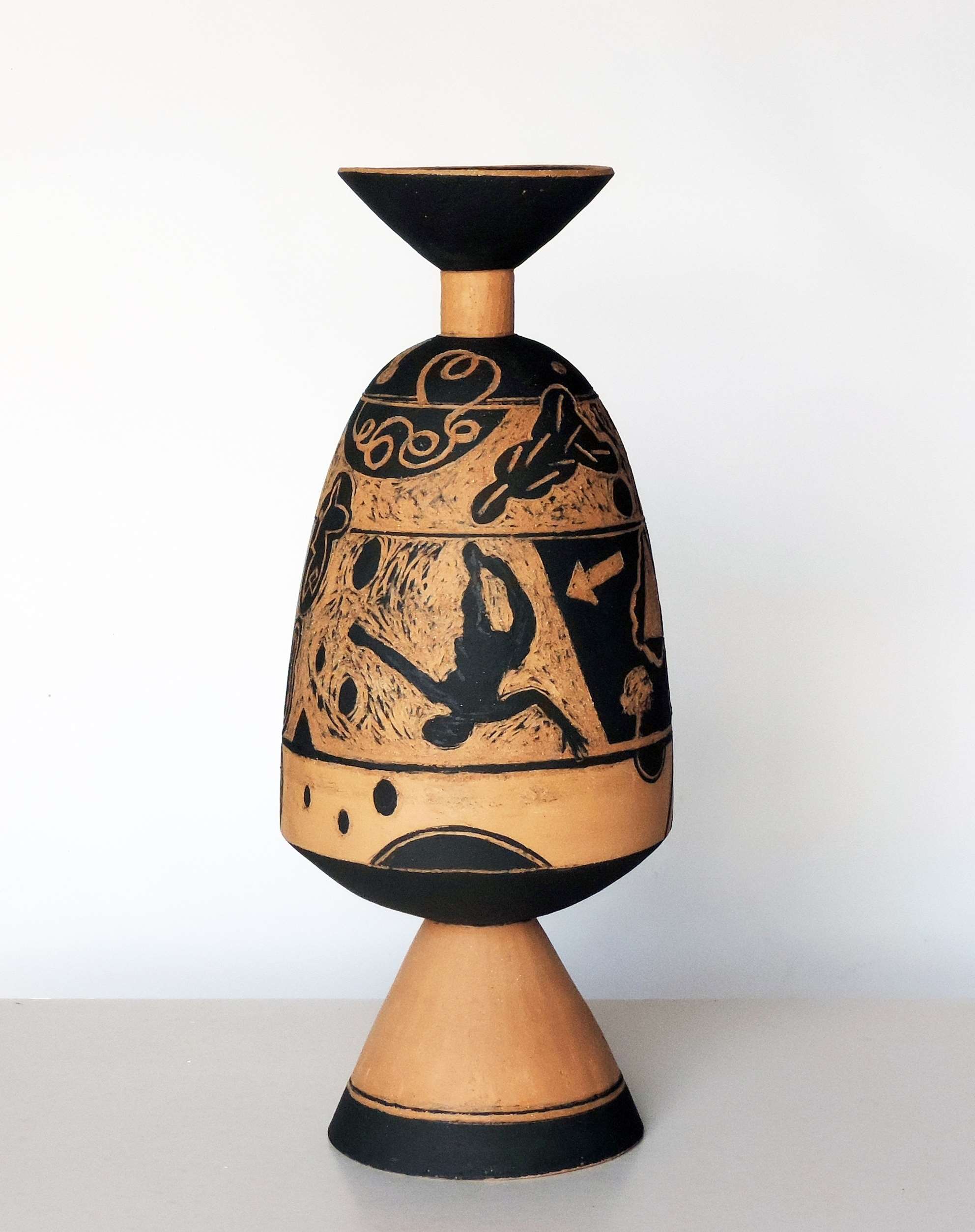
Peder has little patience for a lot of what he sees now. “A lot of young artists are doing this awkward, ironic, bad craft,” he says. He recently visited a show at V1 Gallery in Copenhagen. “It looked as if it was all about making the worst type of ceramics.”
"There’s this idea that spontaneity and clumsiness equals sensitivity in art. For me, it’s completely stupid… I accept it — as long as surgeons don’t adopt the same philosophy. I don’t want heart surgery from someone who’s spontaneous.”
Technical mastery has not disappeared from contemporary art, but a feeling of “looseness" often carries a different kind of cultural authority. Something that is awkward, or raw, can read as honest and accessible. Of course, there’s something hopeful in that — a sense that anyone can make and express. But for an artist who has spent five decades refining clay, the shift is not neutral. When rawness becomes the language of accessibility, mastery risks being misread.
“Everybody in the whole world feels something,” Peder says. “Most people can say, ‘I’m angry with you.’ But to express more complicated things in another medium is different. To write an opera, you need to understand music and its history. It would be impossible without that context. Ceramics are the same. It has a heavy history. To make something new, you need to know what came before.”
He shrugs. “Of course it’s easier to be clumsy and call that feeling. But a 17th-century porcelain from Meissen in Germany may carry just as much sensibility — you just have to look differently. But of course: When something is very well made, it can at times appear superficial, and that’s the dilemma.”
“So mastery in art can work against you?” He smiles. “If you’re a bad boxer, you’re knocked out in the first round. In art, it’s not so simple. I’m not a very good boxer — but I am very sensitive, and I work. If you don’t work, you’re out in the first round.”
Much like a method actor who slips into character in order to inhabit another life from the inside, Peder approaches writing through physical immersion. “I did this because I was working on a piece about the ceramics of Paul Gauguin. This is one of my copies of his work, and I made many of them, simply to be able to write about it properly, to understand how he did it, how long it took him.”
“I work with themes that I find funny, and I make them for fun,” Peder says. “But it’s odd — I wrote a book about an artist called Karl Hansen Reistrup , who was a master modeling animals. To describe his work properly, I started modelling animals the way he did, in the French traditional style. I wanted to understand how he was working — and maybe why. “I modelled animals for over half a year. I got completely carried away. I ended up with around forty of them. And then I thought — what do I do with them?”
“I make books, pots, graphics, drawings — many things,” Peder says. “But it takes time. If you’re investigating a new technique, you shouldn’t show the first five results. You wait until you’re good at it. The first pieces you make may seem good enough. A year later you look back and realise they weren’t — because you know more.”
He has little interest in producing simply to exhibit. “How many exhibitions did Leonardo make? Not many… maybe none. You don’t have to make exhibitions just because you’re an artist. You can just make art.” Exhibitions, he explains, alter the thinking: you begin planning for corners and sightlines rather than responding to the work itself. “I’d rather make the work first and then see what it wants.”
Books follow the same logic. “I write the book first, then find the publisher.” He gestures to his latest completed 400-page book, “The Language of Ceramics.” “You don’t make this in two weeks. It takes time.” He recalls Henry Miller, who later in life realised half an hour of writing a day was enough. “That’s how you get many books.”
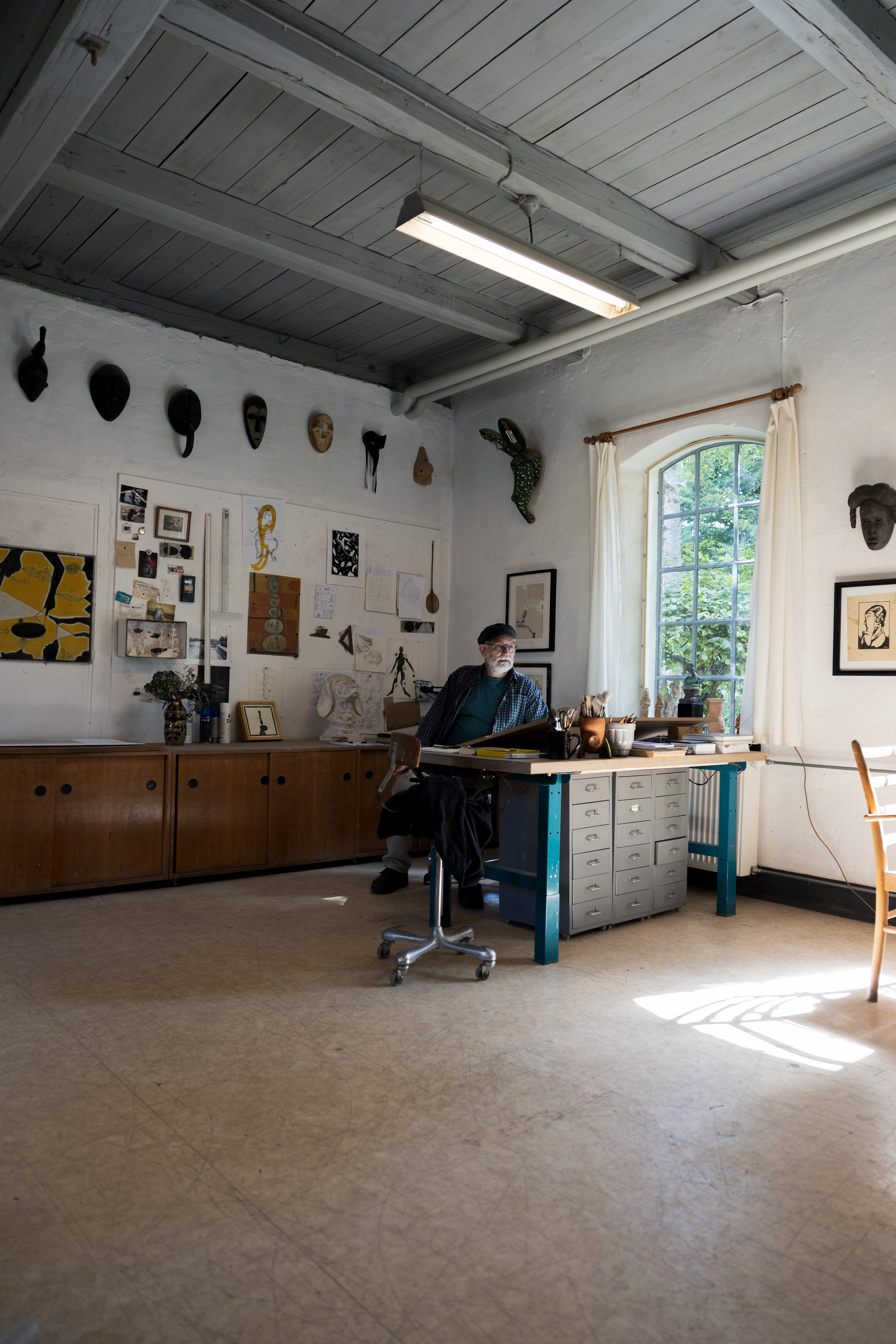
“That’s the good thing about getting older, you don’t doubt so much anymore. You think, well, I’ve done it. Of course there’s always a fifty–fifty chance someone will say it’s shit, but when you’re older, you mostly think: what do I care? That’s simply the condition.”
Karen and Peder first met in the early 70s, and have now been married for over fifty years. “I met Karen through her sister, actually.” Peder says. “I gatecrashed her sister’s twenty-first birthday. I didn’t know it would last that long… it’s either a one-night thing or fifty-five years.” He smiles. “It’s one or the other. This was the other.”
I try to imagine what it must feel like to have someone beside you for fifty years — someone who has witnessed nearly every stage of your life. It’s a kind of duration that feels increasingly rare.
“I don’t know whether a long-term relationship is a quality in itself… If it works it works. You’re not throwing each other out if it works. If it doesn’t work, why force it to work? There are many ways,” Peder continues. “The good thing about modern times is that you don’t have to enter a pre-conceived relationship. You can choose what kind of relationship you want — that’s the advantage. Ours is built around this house, around having the same kind of job, and an interest in each other’s work. Our careers are different, but we both did teach - now years ago. Sometimes we’re in the studio together… And well, come night time, I’m forced to make dinner.” Peder side glances at Karen without moving his head. She’s smiling, she’s heard this one before.
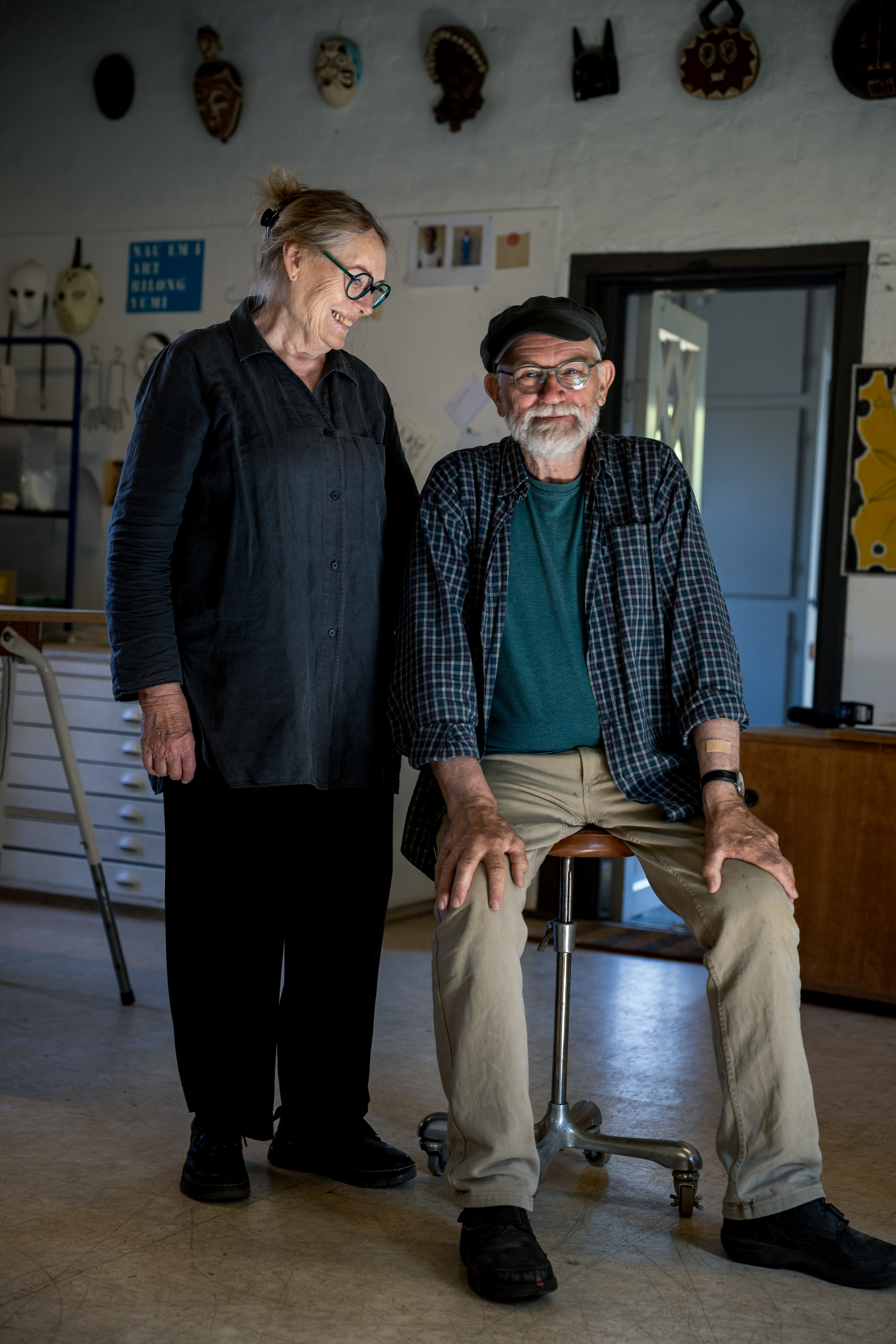
After a morning with Peder Rasmussen and Karen Bennicke, aging feels less like chance and more like practice. A good life, like good work, requires repetition. As artists, they return to their work. As husband and wife, they return to each other. Both are forms of discipline.
“Your life won’t just fall onto your lap without participation, you have to begin with something, and accept that it will likely end up in a completely different place. You can’t make a life by talking… You have to act, to say, this is a nice house, this is a nice wife, so we start with that… then see what’s happening. That’s more or less like it goes… and suddenly the years go by and you think, ‘Ah was that it? I want another one!’” Peder says, “Another life or another wife?” I ask him with Karen nearby, who is thoroughly enjoying Peder’s soliloquy. “They’re more or less the same thing” he finishes, them both laughing.
“If I am remembered!” Peder emphasises when I ask him how he’d like to be remembered. “I think people are easily forgotten these days, there’s always new stuff coming up, and new people, and new writers and new potters, so I think you can’t expect to be remembered…When we started, ceramicists were hugely celebrated. Today, perhaps a few remain in memory — Salto, for example. Everyone knows him."
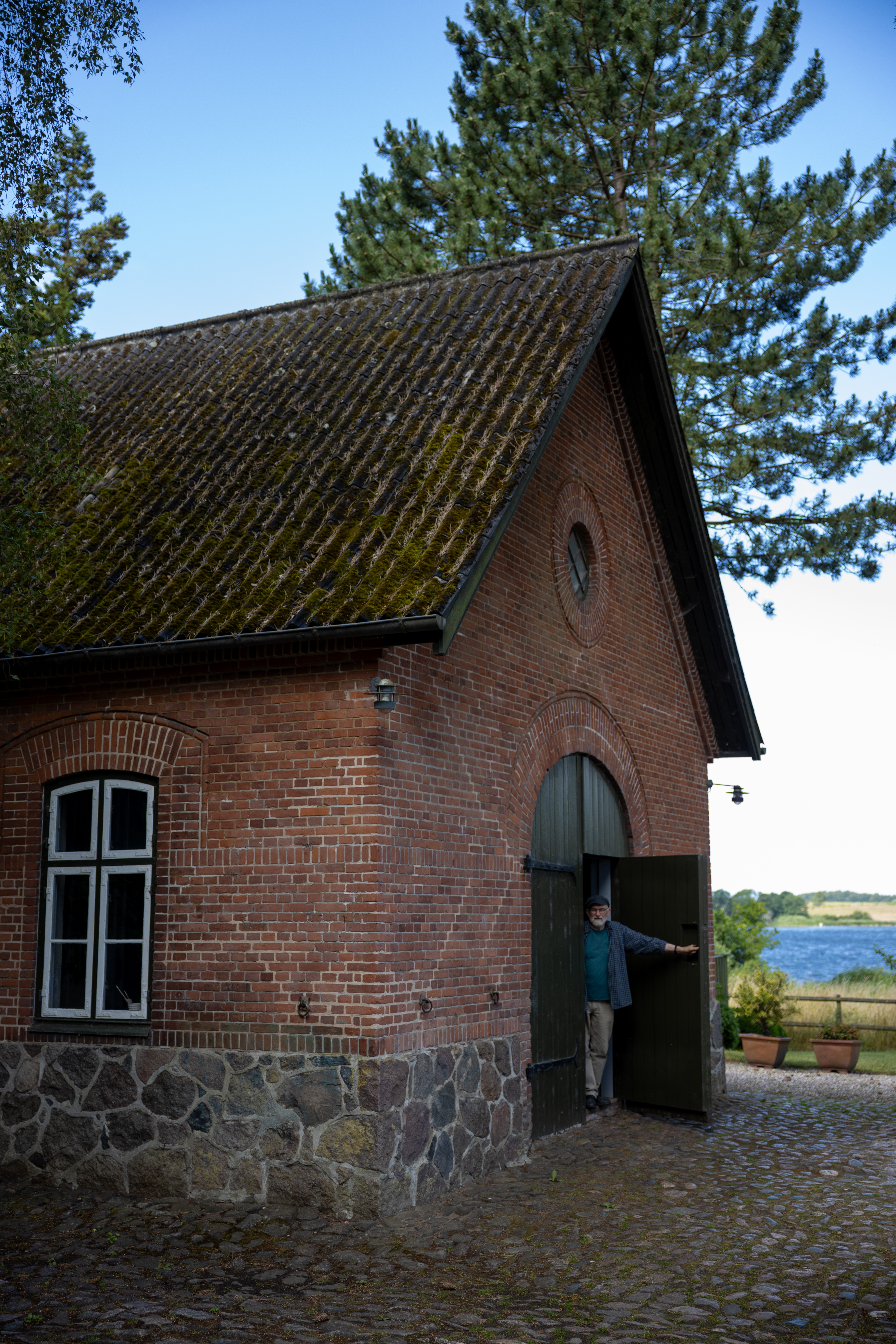
“Time is simply moving too fast… as long as the ones near to me think ‘He was ok,’ then that is fine by me, “but I won’t know, will I? How I will be remembered is not my problem, my problems will be over by then, I’m not worried… Beethoven, getting older, said, ‘Now I need to start thinking of posterity too’ - but I say ‘You don’t have to.’ That’s not the job, the job is being alive, that’s the difficult part, being dead is very very easy.”
I tell them I’ll meet them at CLAY in January 2027. “If we’re still alive, we’ll be there” Peder announces his mortality again, “But I guess if we’re gone, it’ll still go on, either way, you’ll be able to see it.”